




By Diona Young
Table of contents
What one 12-year-old sailor reminds us about sailing education, safety, and the next generation at the helm.
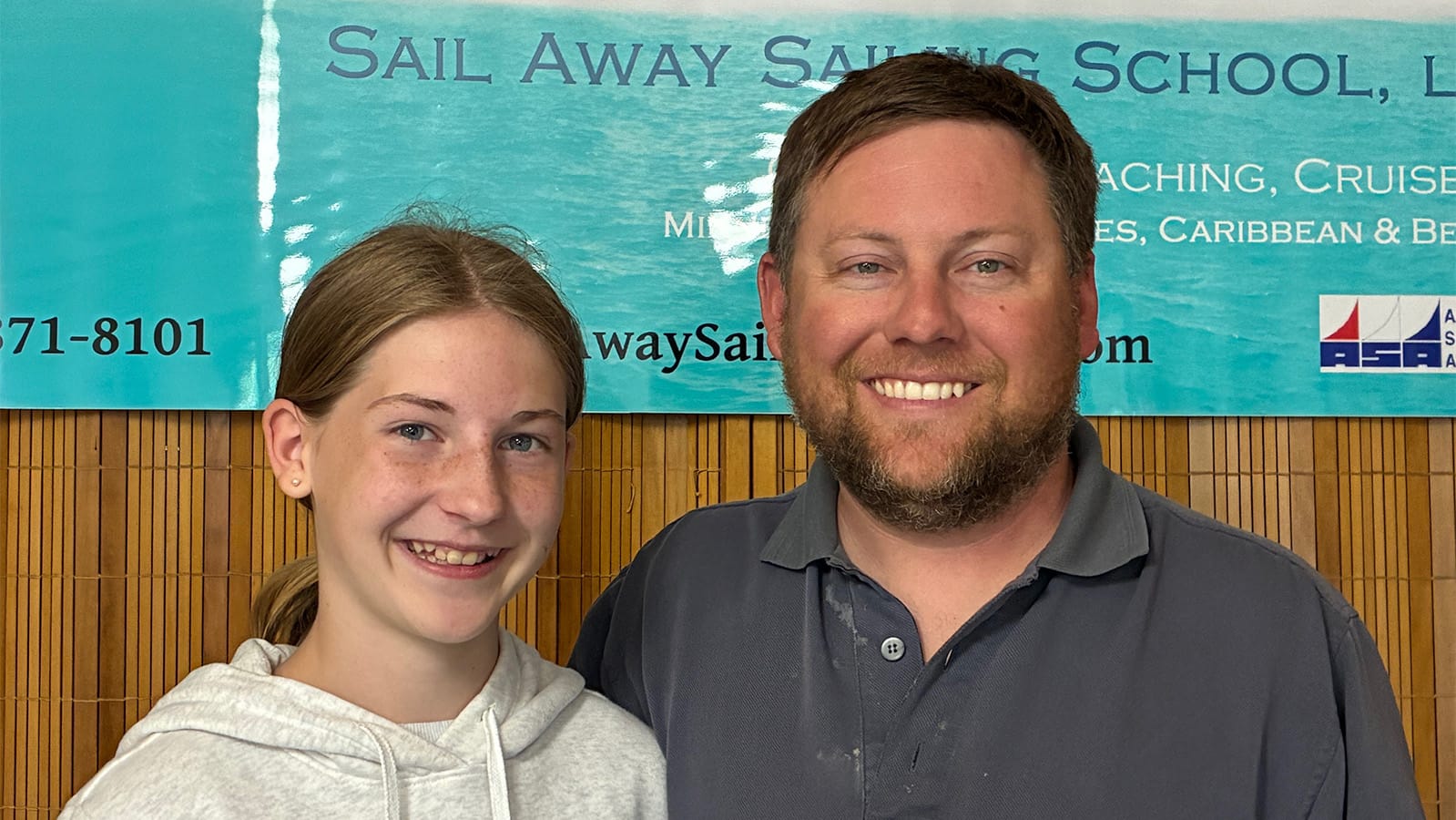
Meet Aria

When most people imagine a student in an ASA 103 Basic Coastal Cruising course, they picture an adult learning to sail later in life, perhaps preparing for charter vacations or working toward boat ownership.
What they probably do not picture is a 12-year-old confidently handling docking maneuvers aboard a 44-foot sailboat.
But recently in the British Virgin Islands, that is exactly what happened.
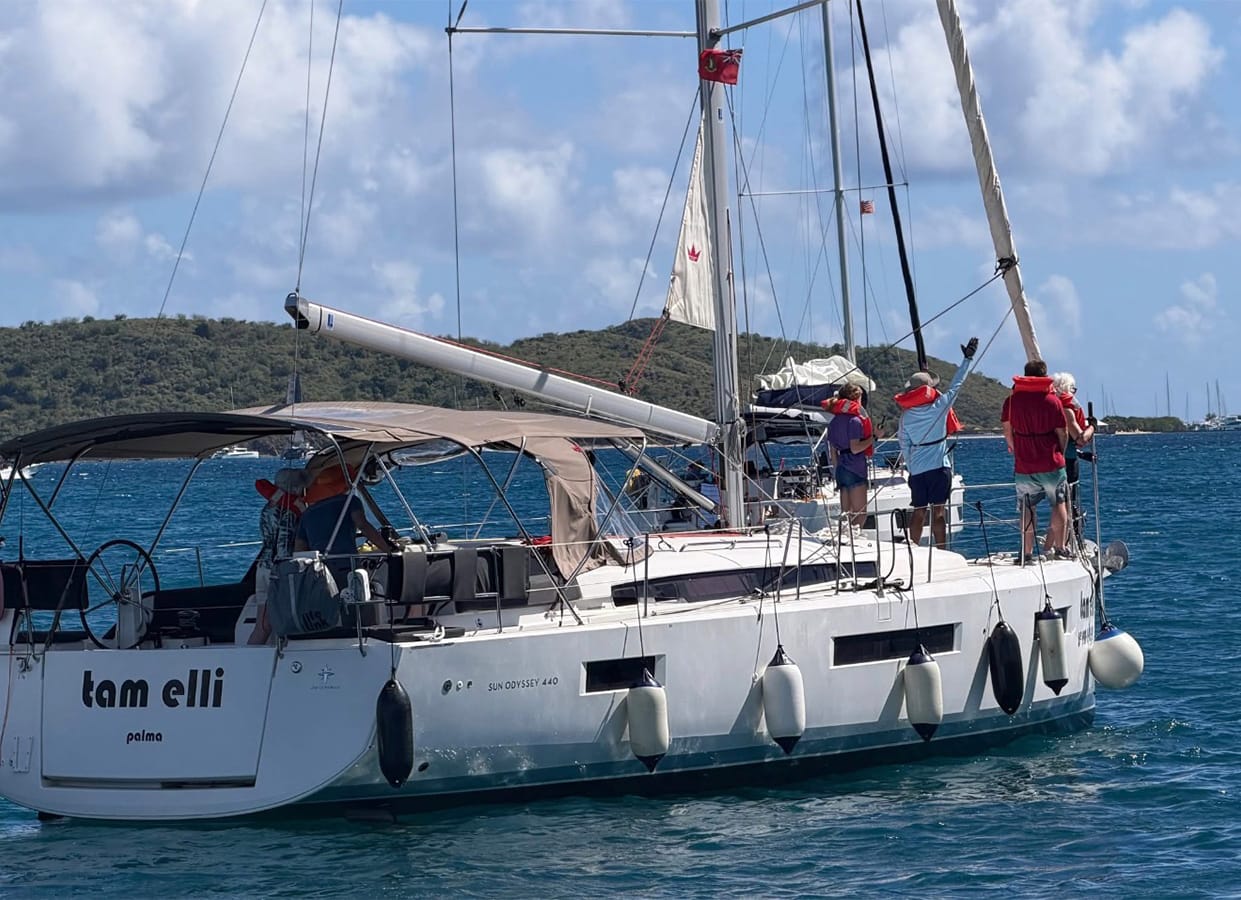
Aria completed her ASA 103 certification aboard a Sun Odyssey 44 during a liveaboard course alongside her father, Peter, and three additional adult students. According to Senior Master Instructor Capt. Joan Gilmore of Sail Away Sailing School, Aria quickly stood out.
“Aria was one of the best students I have taught when it comes to docking, standing turns, and general helm skills,” Gilmore shared. “She may be the youngest person to obtain the ASA 103 certification.”
Stories like this tend to spark an immediate question throughout the sailing community:
Can kids really earn sailing certifications?
The answer is more nuanced than many people realize.
Is There an Age Requirement for ASA Certifications?
A common question at sailing schools from parents is whether their child is old enough to begin working toward certifications.
According to American Sailing, there has never been a formal written policy establishing a minimum age requirement for students enrolling in certification courses. Instead, those decisions are generally left to each affiliate sailing school, academy, club, or charter company.
At the same time, many instructors and schools recognize that certification-level courses such as ASA 101, 103, and 104 are typically designed with adult learners in mind.
American Sailing’s Director of Education notes that over the years, instructors have found that factors like vocabulary, life experience, attention span, communication style, and referential understanding can affect how younger students process course material and participate in group learning environments.
For that reason, many schools view age 18 as the most appropriate age for higher-level certifications, though exceptions can exist depending on the student and the circumstances.
Courses like ASA 110 Small Boat Sailing are often a more natural fit for younger sailors, while liveaboard cruising certifications require a different level of maturity, endurance, and situational awareness.
Still, there is no universal answer because sailing education is not one-size-fits-all.
Why Age Is Only Part of the Conversation
Sailing schools are trusted to evaluate students individually, and experienced instructors know that readiness is about far more than a birthdate.
A motivated younger student in a private family course may thrive in ways that are difficult to replicate in a traditional group setting. Some kids arrive highly focused, eager to learn, and completely comfortable taking instruction alongside adults. Others may not yet be ready for the pace or expectations of certification-level training.
That judgment call is part of what makes quality sailing instruction so important.
Safety, communication, and seamanship are always the priority. Instructors are not simply teaching students how to steer a boat. They are teaching decision-making, crew awareness, emergency preparedness, and responsibility on the water.
Those standards do not change simply because a student is younger.
That is one reason stories like Aria’s stand out. Her accomplishment was not notable because she was handed a certification at a young age. It was notable because she successfully met the same standards expected of every ASA 103 student.
Certifications Are Earned, Not Given
Within the boating community, sailing certifications carry meaning because they represent demonstrated competency.
Students are expected to complete written evaluations and practical on-the-water assessments that test real-world sailing knowledge and skills. Depending on the course level, that may include sail handling, docking, crew communication, navigation concepts, safety procedures, anchoring, rules of the road, and boat systems.
For schools and instructors, maintaining those standards matters.
Sailing can be adventurous and incredibly rewarding, but it also demands preparation and respect for the environment around you. Strong sailing programs emphasize confidence through competence, not confidence without experience.
That is especially important when working with younger students.
When schools choose to teach motivated younger sailors, they do so carefully and intentionally, often in environments where instruction can be adapted to the student’s learning style and maturity level while still maintaining certification standards.
Why Some Young Sailors Excel
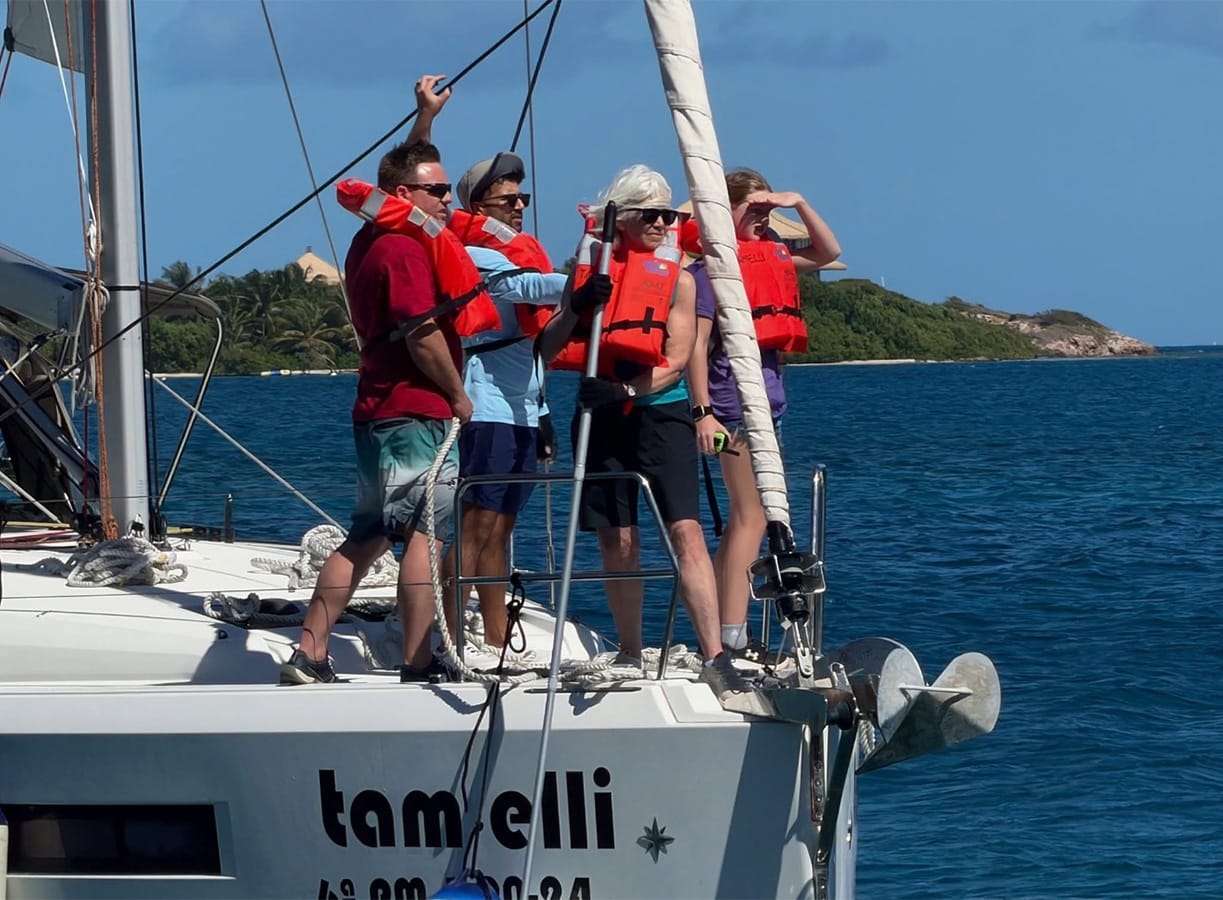
Interestingly, many instructors will tell you that younger students sometimes become exceptional sailors.
Kids and teenagers often approach sailing with curiosity and humility. They tend to listen carefully, absorb feedback quickly, and remain highly coachable. Without years of habits to undo, they can sometimes develop strong technical skills surprisingly fast.
They are also growing up in environments where teamwork and communication are emphasized regularly through school, sports, and extracurricular activities.
Of course, every student is different. Not every young sailor is ready for certification-level coursework, just as not every adult student is either.
But when the right student, instructor, and learning environment align, impressive things can happen. Plus, sailing is fun!
Encouraging the Next Generation of Sailors
For parents whose children are constantly asking to take the helm, help with dock lines, or spend more time on the water, stories like Aria’s can feel encouraging.
Sailing remains one of the rare activities where families can genuinely learn side by side. In many cases, it becomes more than a hobby. It becomes a shared experience rooted in teamwork, confidence, responsibility, and adventure.
If your child has expressed interest in sailing certifications, the best place to start is by reaching out to sailing schools and training programs in your area. Experienced instructors can help determine whether a younger student may be ready for formal coursework, recommend appropriate courses, and explain how their school approaches youth participation and safety.
Because while there may not be a universal age limit for sailing education, there is one thing most instructors agree on:
The future of sailing depends on encouraging the next generation to learn the right way.
And sometimes, that future is already at the helm.
About the Author
Diona Young took her ASA 101 in Grenada with LTD Sailing in 2024. Since then, she has earned her ASA 103, 104, 111, and 114 certifications and continued to build real experience on the water. She has bareboat chartered in destinations around the world, including Greece, Sicily, Tahiti, Belize, and beyond. When she’s not sailing, Diona works in sailing education and community, helping other sailors find their own confident first step onto the water.

Join The Discussion