




By Jenny Wight, Director of Educational Development
Table of contents
Many people might think it’s crazy to take a 4- and 6-year-old sailing with you, but we did it successfully last summer for a 3-day family cruise! The love of sailing can start early. If you’re one of those sailors who caught the sailing bug and want to get your family out there on the water with you, I have a few tips. After teaching children to sail for over 10 years, I’ve tried out a lot of ideas, some that were lessons learned (not to be repeated) and other successful ones that stick with me today.
Safety Requirements
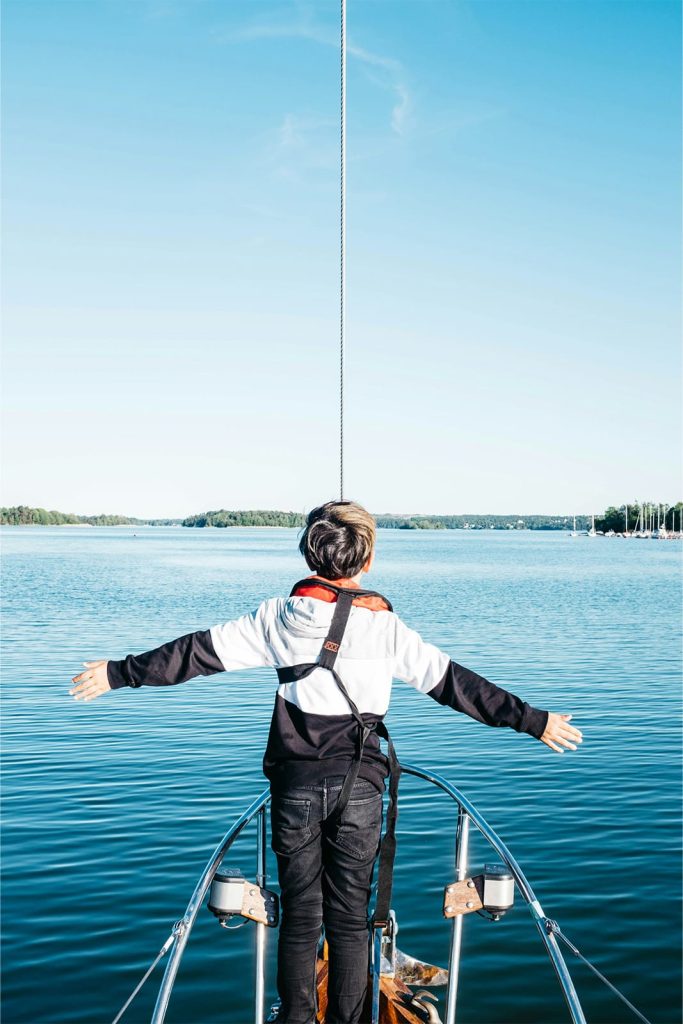
Let’s get requirements out of the way – life jackets are a must, and they’re a must before you step foot on the dock. Make sure you have a life jacket that fits well and is comfortable so they don’t mind wearing it.
Going over safety rules, even teaching kids “one hand for the boat” is so important. If they’re not ready for consistent life jacket use and for a safety briefing, they might need a little more time before sailing.
Personal Briefing
When you make kids feel important, they listen. Tell them that adults always get a briefing on the boat before they depart, and if they listen well and demonstrate certain tasks, they’ll get to do more on the boat. Let them know you need their help. You never know… one day, you might need them to throw you a life preserver.
Make the briefing similar to a briefing for adults, but keep it shorter and more interactive. Go over systems, parts of the boat, how things work, and meanwhile set up your expectations for each part. You’ll probably want to say “no touching” to the battery selector switch, but let them know other parts they can explore. It will be fascinating for them to be shown the engine, bilge, and the working parts of the boat.
Rules When Docking
My girls knew that under no circumstance were they to come up while we were docking. They could watch from the lower steps of the companionway (and they were on their toes watching me back into the slip, so curious about the process), or they could play below. But I talked to them about fenders and what they do, and the importance of staying calm and not distracting the driver during this critical time, and what the other adults would be doing to help me secure the boat. I can’t tell you how much I felt like a super hero when they cheered for me after I turned off the boat. And the great thing is that they were in a safe place to observe but not make me worried.
Swim Time
Build in time for things you know kids will love, like stopping at a beach for them to get out and swim. It’s a great way to let them have a break, and you can make lunch or take a break, too. It also reminds us all why we made the effort to be out on the water.
Toys
Dollar stores were made for these kinds of trips. A friend of mine brought her younger kids on a multi-day sail, and she packed some of their favorite toys to play with below, but she also had a bag of dollar store toys and activities that she reached for when little ones were getting fussy. Don’t forget to chose toys that are quiet, compact (not a dozen tiny parts to be lost in the bilge), and have a good place to stow. Teaching them to be tidy on a boat is pretty critical before getting out another toy.
Loads of Snacks
Cooking underway is a lot of work, so get a ton of their favorite snacks so you can easily grab something throughout the day. Things that are easy to open and easy to eat can make children more independent and create less clean-up for you later. This might mean some prep work for you on land before loading up the boat, but it will be worth it underway.
Learning to Sail
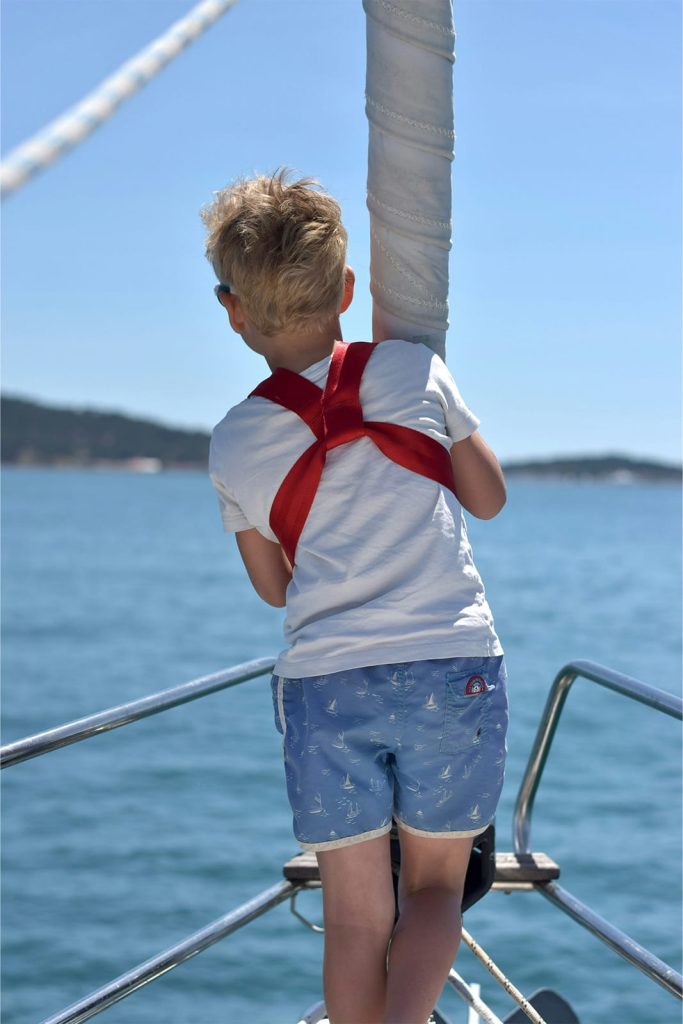
My husband is great about getting the girls to help pull in lines or steer the boat (they don’t notice that his hand is right behind theirs on the helm). Any time they show interest in a task, if you can, take a moment to teach them one aspect of it. You should remind them of clear rules, like not adjusting a sail without asking permission and getting help, but the more you let them learn and try, the sooner you’re going to have a new first mate, confident and ready to go on the next sailing trip.
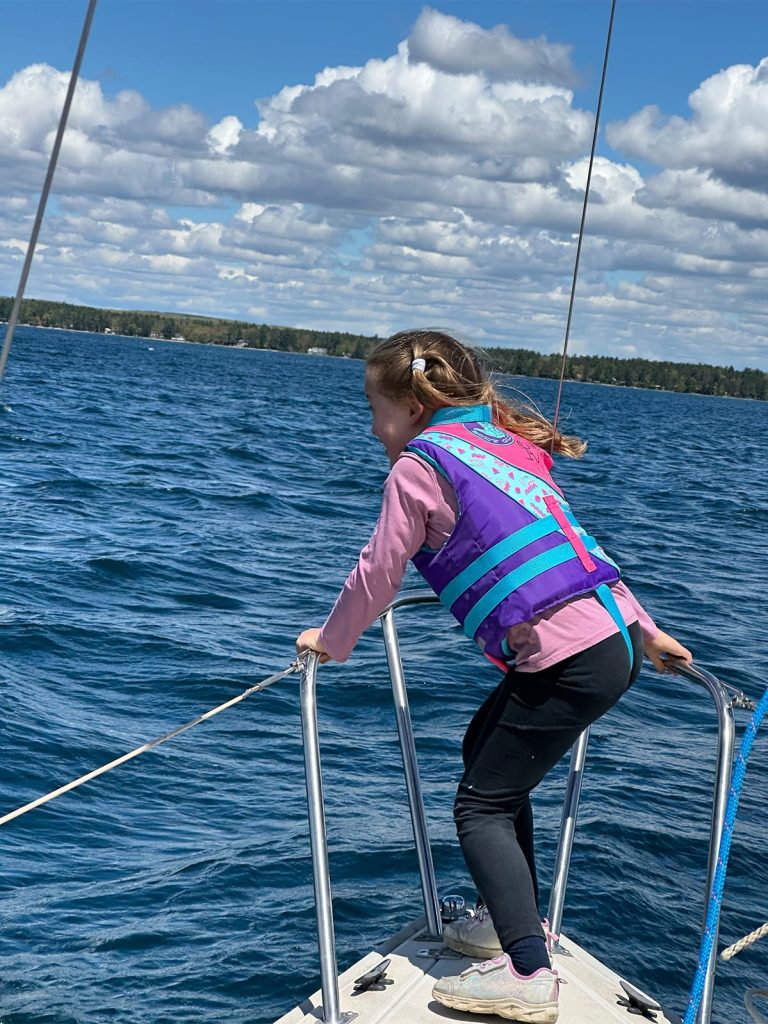
One of my favorite activities on a windy day is to sit on the high side with one of the girls on my lap and talk about the wind and the waves. They already recognize cat paws (tiny waves) and a big breeze headed our way. They love to stand up at the bow pulpit and talk to the wind, telling it to behave.
In short, sailing with young children can be very rewarding. You have to plan a lot, but it will be worth it. You also have to have a plan when things don’t go well, like when something breaks or the sails need to be reefed. Going below and having their toys and their snacks makes it feel like a little home to them. They can play house down there and then venture up and learn more about sailing when they want to. Later, you may slightly recall that it was extra work sailing with young children, but these memories and instilling the love of sailing early will pay off for years to come.
About the Author
Jenny McCain is an ASA instructor and the Director of Educational Development at American Sailing. She has dedicated her career to improving sailing education and supporting instructors worldwide. For questions about becoming an instructor, email her at jmccain@americansailing.com.

Join The Discussion
-
What age did you first take your kids sailing?
Sorry, there were no replies found.
Log in to reply.