





By Rachel Clarke
Table of contents
- 1. Don’t let information overload take the wind out of your sails
- 2. Every boat is different
- 3. Just because you’re having fun, doesn’t mean everyone else is
- 4. Nothing beats experience
- 5. How to make the boat go…slower
- 6. Navigation apps are clutch
- 7. Designate a first mate
- 8. Always expect the unexpected
- 9. Be confident, but not overconfident
- 10. Safety over sea life
- Join The Discussion
I didn’t learn to sail as a child. I didn’t have any family or friends who sailed. In fact, I was well into adulthood before I first stepped foot on a sailboat. And it took another month before I had the courage to call up my local ASA school and inquire about their basic keelboat course.
On day one, it felt like I had a million questions for my instructors (thankfully many were answered during the course without me having to ask!) and almost as many questions for myself: Do I have what it takes? Will I make a fool of myself? Will I fall off the dock when stepping aboard? Will I get seasick? (I think so. Sometimes. Not yet and hopefully not ever. Not yet but any day now.)
Throughout my sailing education, I had some amazing instructors whose wisdom helped make me the sailor I am today. Throughout my time on the water, I’ve met even more sailors, many of whom are now friends, whose experience, stories, and capabilities have been invaluable. From what I’ve learned from them and from my own adventures, here are ten things I wish I had known as a new sailor that I hope will be helpful on your journey.
1. Don’t let information overload take the wind out of your sails
Corny. I know. But hopefully it got your attention, because it’s important to not let the process of learning how to sail take away from the joy of sailing. When you first start out, there’s so much to learn that at times it can seem overwhelming. If you don’t “get it” immediately or if you’re a bit further behind than your classmates, you might feel defeated.
There is a lot to learn, and you might feel anxious about the upcoming test, being called on by your instructor and being unprepared, or taking your turn at the helm. Know that with time, it will all become second nature. So, be sure to remember that you’re doing this because you want to. Set your sights on the horizon, feel the wind on your face, and have some fun.
2. Every boat is different
Just because two boats look similar – similar boat type, size, sails, engine – doesn’t mean they are the same or behave the same way. They could have a different keel that affects how they turn, how they heel, or their depth requirements. Differences in rigging or how well they’ve been serviced could affect their speed.
It is prudent not to make assumptions. If you’re stepping onto an unfamiliar boat as skipper, ask questions of the boat owner or charter company, review the spec sheet, and test out how it moves while docked or in the harbor before heading out to sea.

3. Just because you’re having fun, doesn’t mean everyone else is
You may enjoy when the boat’s heeling and you’ve got the rail in the water, beating into the wind with the cockpit filled with spray. You may love a fresh breeze, sailing in the rain, or the challenge of navigating a confused sea. Your go-to crew may also feel the same, but if even just one person aboard is white knuckling it, cold, or queasy, it’s not a good time.
Take a look at your passengers, assess how they’re doing, and adjust accordingly. Being a good skipper means ensuring everyone feels comfortable, safe, and is having fun.
4. Nothing beats experience
Reading the textbooks cover-to-cover, taking classes or private lessons, watching videos, taking tests and quizzes, and studying, studying, studying all contribute to your sailing knowledge and help you build a strong foundation. But it is only a part of what makes a good sailor.
Book knowledge and guided instruction will only take you so far. Get out on the water, whether it be as skipper or as crew. Hoist the sails, feel how your boat moves through the water, and how adjustments to your sails affect its speed. Make decisions, face challenges, and complete a passage. These things are what give you the confidence and experience to be a proficient sailor.
5. How to make the boat go…slower
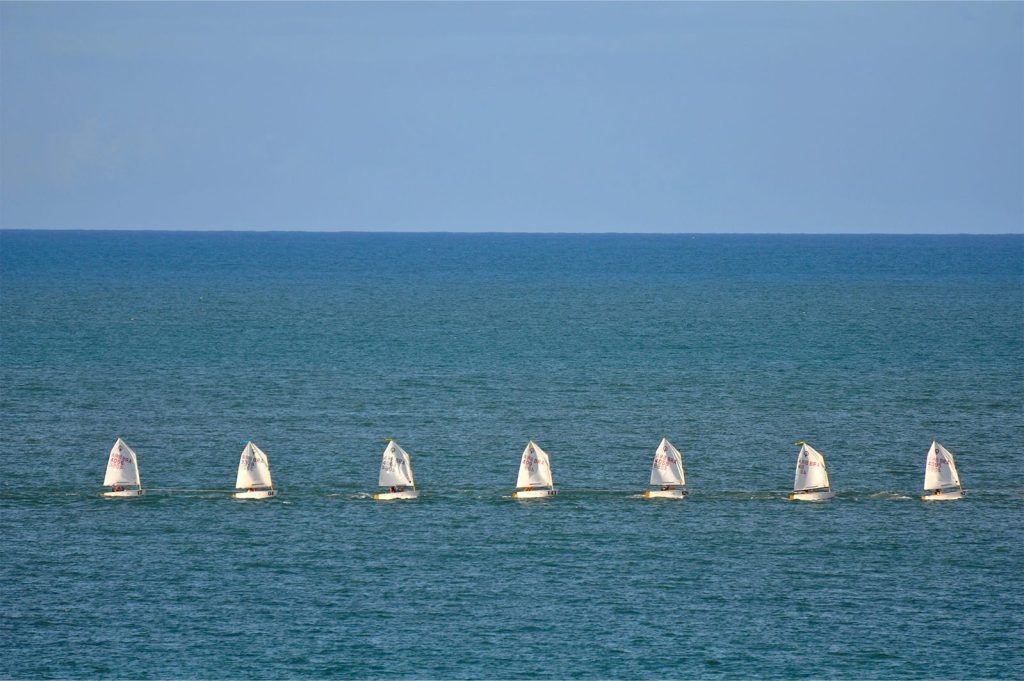
Much of what you learn when you first start out is how to harness the wind to make the boat move, which is not always easy to do. Figuring out where the wind is, what angle your boat and sails have to be positioned to the wind, and keeping your boat in the correct position to keep it moving takes practice.
So, like me, you may not have been quite as focused on how to slow your boat down. This information is sometimes more important (such as when an unexpected gust sends you careening toward the nearby fuel dock) than getting it moving in the first place.
Know that you can ease your sails to reduce your speed and reduce heeling. You can “blow your sails” or turn away from the wind to more quickly reduce speed and right your boat. Reef your sails to prepare for stronger winds, or douse your sails altogether to minimize the wind’s impact on your boat is key. It’s always better to know how before you need to do it.
6. Navigation apps are clutch
Not every boat comes fitted with a chartplotter. This device gives you key information such as where you are, where the charted obstructions are, and where you can find the harbor entrance.
While in many circumstances your own eyes, a paper chart, and other handheld navigation tools can do the job, there are instances when having a digital tool is ideal. When you are the only sailor aboard who can read a paper chart, when all others aboard are only passengers (not crew), or when a dense fog settles in and you can’t see more than a boat length in front of you, you need help. Having an app downloaded to your phone and ready to go when needed is a must. Having one that can log your day sails is a fantastic perk.

7. Designate a first mate
When skippering a small boat with just a handful of crew or passengers, you may not think it important to designate a second-in-command. But even on a small vessel, assigning roles and responsibilities, and naming a first mate is essential should an “all-hands-on-deck” situation arise, or if you just need to relinquish control for a few moments to head below deck.
It’s far better to know that your selected crew member has your back than to discover, too late, that your lack of clear instructions left you crewless with a boat full of tipsy passengers.
8. Always expect the unexpected
You can check the forecast, study the weather patterns, select a capable crew, pack your gear bag for any number of eventualities, but you can’t prepare for every possible outcome. Be open to the idea that things can change in an instant. This will ensure that you stay vigilant and will be quick to react and adapt, not be frozen by shock or indecision.
Whether your engine stalls in a crowded harbor, a crew member becomes seasick when you’re miles from the marina, a warm sunny day turns cold and stormy, or a sudden change in wind direction sends your crudité platter overboard, you’ll be ready to take action.
9. Be confident, but not overconfident
You’ve studied, learned from your instructors, and practiced with your classmates. Maybe you’ve passed the test and are now an ASA certified sailor. You’re ready to charter a boat and take your friends and family out for a day sail… or are you?
Some beginner sailors have an instant confidence in their ability to hop on a boat, take it off the dock, raise the sails, and take it out to sea. Others question their readiness, their abilities, and develop a case of the “what ifs.” While some levels of self assessment and trepidation are good, lacking all confidence can be detrimental. Being confident inspires confidence in your passengers that you know what you’re doing and that they’ll be safe with you in charge. A lack of confidence breeds unease.
If you’ve studied, practiced, and absorbed what you’ve learned, then you’ve earned the right to a little confidence. But not too much. Just as a lack of confidence isn’t optimal, neither is overconfidence – deserved or undeserved.
10. Safety over sea life
It’s easy to forget everything you’ve learned about safety at sea the first time. A dolphin swims at the bow, or you pass a buoy laden with sea lions, or a whale spouts nearby. If you’re the skipper, then you’ll have to tamp down your excitement and remember that the safety of your crew, passengers, and the boat come first. You may have to remind everyone about the “one hand for you, one hand for the boat” rule because you don’t want that photo op to result in a hat, phone, or even a person overboard.
About the Author
Rachel Clarke learned to sail through the ASA program at Bluewater Sailing in Marina del Rey, beginning in 2013. That first experience sparked a passion for sailing that led her to continue her education, earn her ASA instructor certifications, and obtain her captain’s license.
She sails year-round, primarily out of Marina del Rey, with experience on boats ranging from Catalina 22s to Catalina 34s. Her background blends hands-on local sailing with structured instruction, giving her a practical, student-focused approach to teaching on the water.

Join The Discussion
-
What’s one thing you wish you’d known when you first started sailing?
Rachel Clarke writes about the 10 things she wish she knew as a new sailor:
https://americansailing.com/articles/10-things-i-wish-id-known-as-a-new-sailor/

americansailing.com
10 Things I Wish I’d Known as a New Sailor
10 Things I Wish I’d Known as a New Sailor shares practical lessons on confidence, safety, and seamanship learned through experience.


Log in to reply.