




By Giovanni Profeta
Table of contents
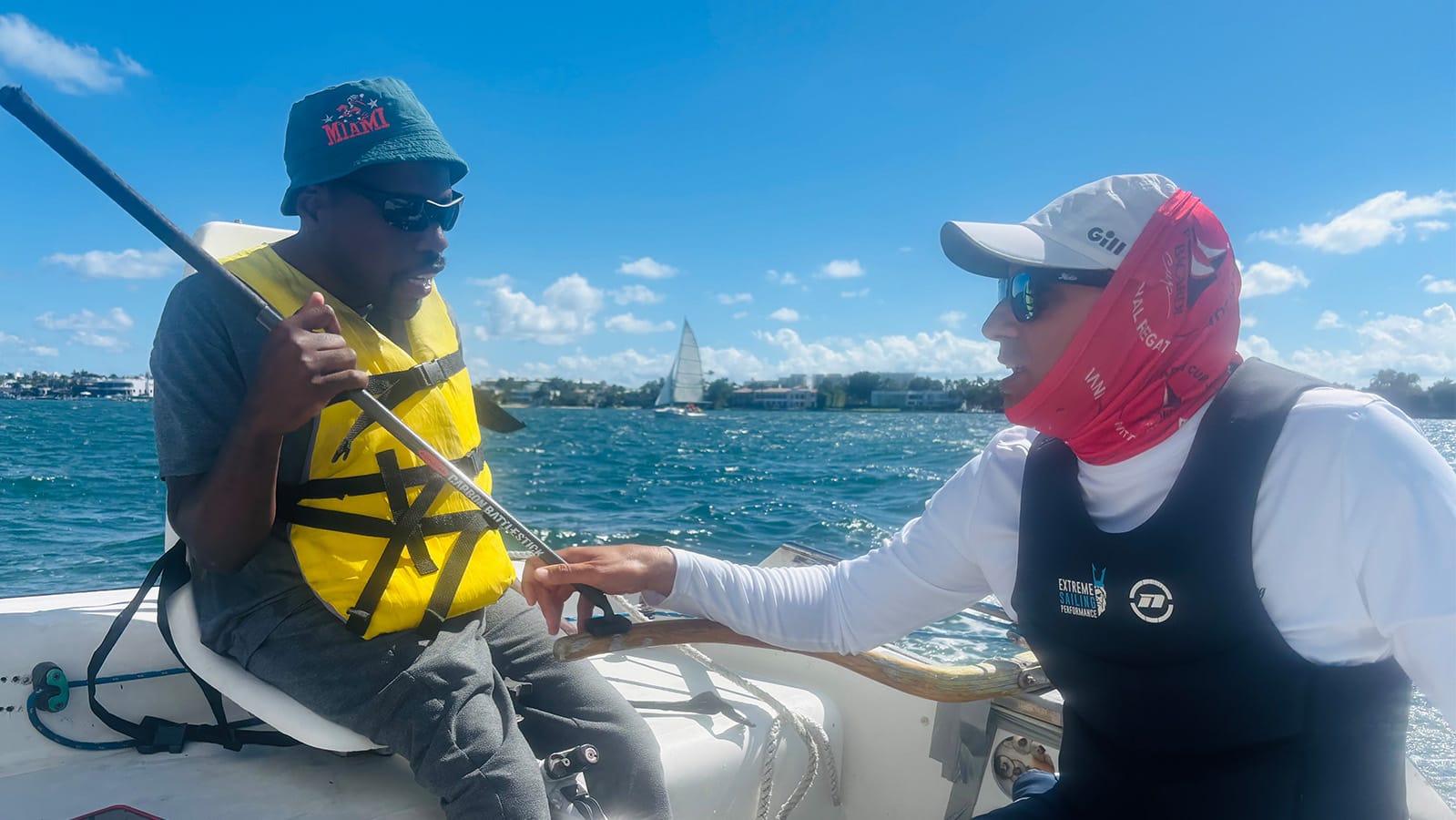
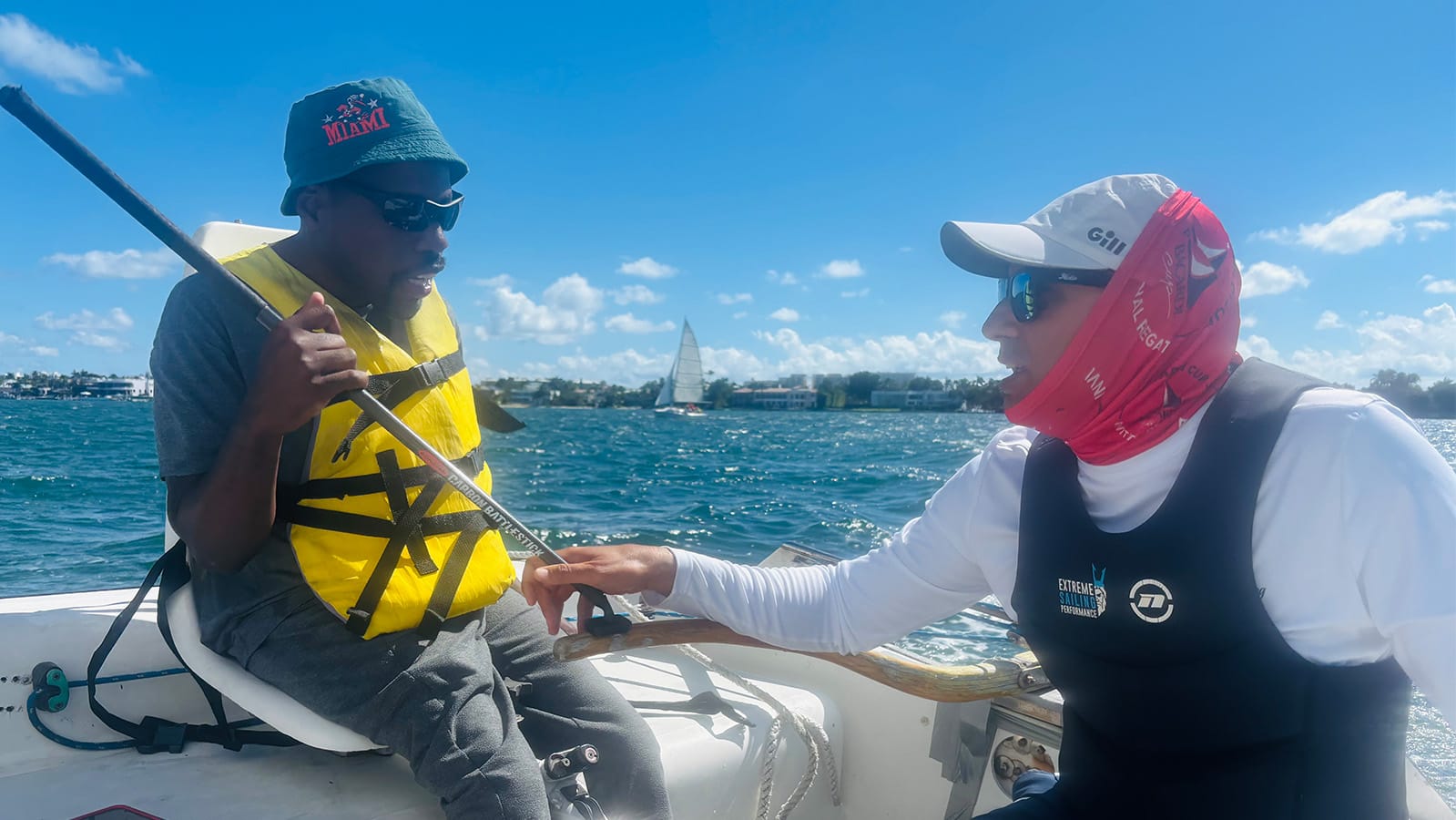
“I want you to dock the boat today, Spencer,” I said, checking my surroundings once more to ensure everything was in order.
The wind was blowing gently from the east-northeast at no more than 10 knots, making it the perfect direction for a tack, allowing us to kiss the dock with the wind right at the bow to slow the boat down.
Spencer looked at me with wide eyes and replied, “I don’t know if I can do that.”
I turned to face him directly and, with confidence, said, “You’ve been steering this boat for over 45 minutes without any issues. I know you can do this.”
As we approached the dock, I noticed how tightly he gripped the tiller, his knuckles as white as the seat he was sitting on. Once more, I reassured him with a nod and then saying “Alright, Spencer, tiller towards you… a bit more!”
The boat began to edge closer to the wind, maintaining just enough momentum to reach our spot. As we neared the rubber protection on the side of the dock, I instructed him to steer fully into the wind, causing our boat to slow almost to a stop.
Once the boat was secured, people on the dock began to applaud him, a well-deserved recognition. He was nearly moved to tears of joy at that moment. It was a triumph; he had managed to dock the boat without any problems, and he could hardly believe it. I approached him, shook his hand, and looking straight into his watery eyes, I said, “I told you; you got this.”
Everything changed for him that day; he even began to walk with more confidence, having completed a task that once seemed unattainable given the ways his autism shapes how he learns and processes new experiences.
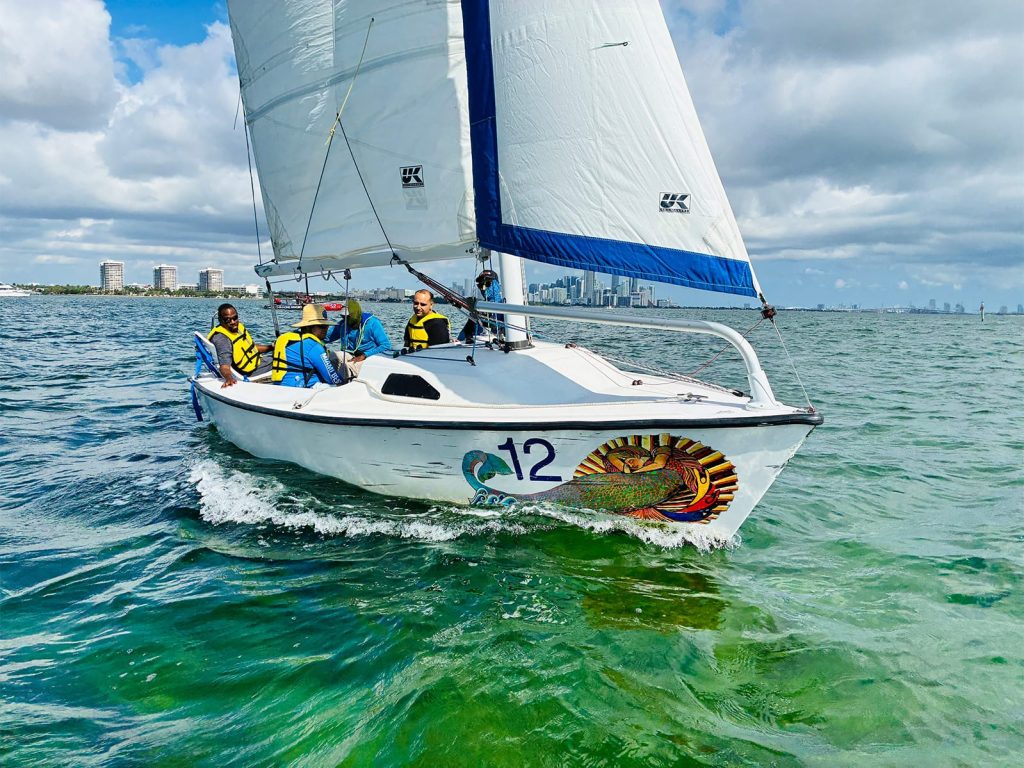
Integrating a person with a disability into sailing is a deeply rewarding journey. Experiences like the one described here illustrate how sailing can help individuals move beyond the constraints of their disability and discover a newfound confidence on the water.
In this article, we explore how adaptive sailing enables us to support students in surpassing their limitations while fostering their independence with essential sailing skills.
Adaptive sailing modifies traditional sailing instruction to meet the various physical, cognitive, and sensory needs of each disabled participant. This may include everything from physical sailboat retrofit accommodation to breaking certain sailing skills into smaller, more manageable steps.
As a sailing instructor in the Marine and Hospitality Vocational Program (MHVP) at Shake-A-Leg Miami, my role is to find the path of least resistance and convey abstract concepts, such as wind direction, more tangibly. This work is challenging, but it has taught me that persistence is powerful; even a drop of water can break a stone.
Adaptive techniques, such as structured repetition, positive reinforcement, classroom simulations, and the deployment of my “signature move,” have become essential tools in my teaching. These methods have helped students go from hesitancy in taking the tiller to docking with confidence.
Positive Reinforcement and Repetition
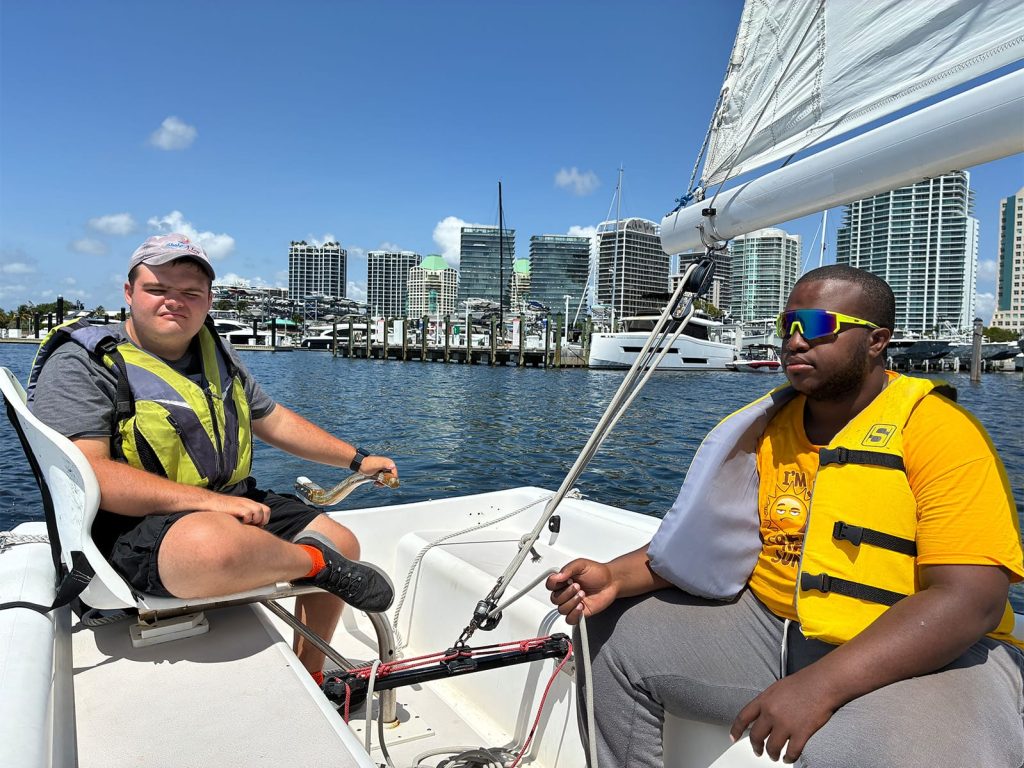
For many of my students, they have spent their entire life listening to “LEAVE THAT!”, “DON’T TOUCH THAT!” or “YOU DON’T KNOW WHAT YOU’RE DOING!”
In adaptive sailing, my goal as an instructor is to replace that criticism with support, patience, and hands-on engagement, encouraging their involvement and interaction. When I ask a student to take the tiller, I am often met with wide eyes and the recurring expression, “I DON’T KNOW HOW TO DO THIS!”
My reply is always the same:“You don’t have to worry, I’m sitting right in front of you. If I see danger, I’ll take over immediately.” This provides a sense of comfort and trust that ensures them that no matter what they do, I am there to take them out of danger. I simply see their defenses go down a notch, a relaxed disposition takes over them and they become more open to learning.
I can understand how difficult this may be if you are used to being judged all your life by your classmates, peers, friends and family, and therefore, letting go of that scrutiny is a game changer. I always assure them that I am there to teach them, not to judge in any shape or form.
As an ASA 101 sailing instructor, I have also learned that information retention varies widely among my students. A figure-eight knot mastered one moment may be forgotten minutes later.
To adapt, I address this by first asking whether my students are right or left-handed. I learned the hard way and how challenging it is to tie a stopper knot with my non-dominant hand. I have adapted to tying knots with both hands, having been taught right-handed first, a common struggle for us lefties in a right-handed world. Matching instruction to their dominant hand not only improves recall but also reinforces motor skill memory, making knot tying more accessible to them.
I rely on repetition and positive reinforcement every day, and it pays off in the end. It took me weeks to teach an autistic student how to tie a bowline, but by the end of the course, he was joyfully teaching new students how to tie this exact knot. Witnessing him tie the knot with such ease was incredibly rewarding, like a single drop breaking a stone.
This foundation of trust built out of repetition sets the stage for more complex abstract concepts, such as understanding where the wind is coming from, a crucial lesson for any sailor.
Classroom Wind Simulation
Learning to sail can be overwhelming for anyone, given the amount of variables to consider, such as wind direction, obstructions, and oncoming traffic to name a few. Even something as simple as where you sit on a sailboat can significantly impact how our boat moves.
For students with physical disabilities, limited accessibility might dictate how they move within the cockpit, but it does not hinder their ability to steer. I have witnessed visually impaired skippers execute flawless upwind and downwind legs with the help of their sighted crew.
Inspired by this, I adopted a different approach in the classroom to teach my students about wind direction in a more tangible manner, especially for students who process sensory information differently.
We often keep cooling fans onboard for those who struggle to regulate their body temperature, and these fans serve as the perfect tool to simulate “wind” in the classroom. By using a gaiter to blindfold the student, I move the fan around them to help create a connection between their physical senses, the shifting “wind” and its direction.
For students with autism, who may experience a sensory overload on the water, this controlled, classroom simulation reduces the volume of stimuli to enable them to focus on a clearer understanding of wind direction. Once students can understand and feel where the wind is coming from, they are ready to successfully steer a boat independently.
The Signature Move
One of the confidence boosting tools I have in my toolbox is something my students affectionately call “my signature move.” Outside of the MHVP program, on weekends, I have the pleasure of sailing with the general public, veterans, and young adults with or without disabilities on a Catalina 20. I take the time to get to know who is truly eager in understanding why and how our boat moves.
At the right moment, I have them sit right next to me, and casually ask “Can you please hold this (the tiller) for a second? I need to tie my shoelaces.” As they take the tiller, I begin giving them instructions (e.g., “Tiller towards you”), and after a few moments, I cross my legs to reveal the obvious: they’ve been steering the entire time.
It is simply incredible how they begin to smile as they realize they are in control. What began as a lighthearted stunt has become a meaningful teaching tool, one that, of course, requires careful judgment and a safe environment. That moment of unexpected responsibility shifts their mindset from passenger to crew, making them an active participant in the sailing activity.
Final Remarks
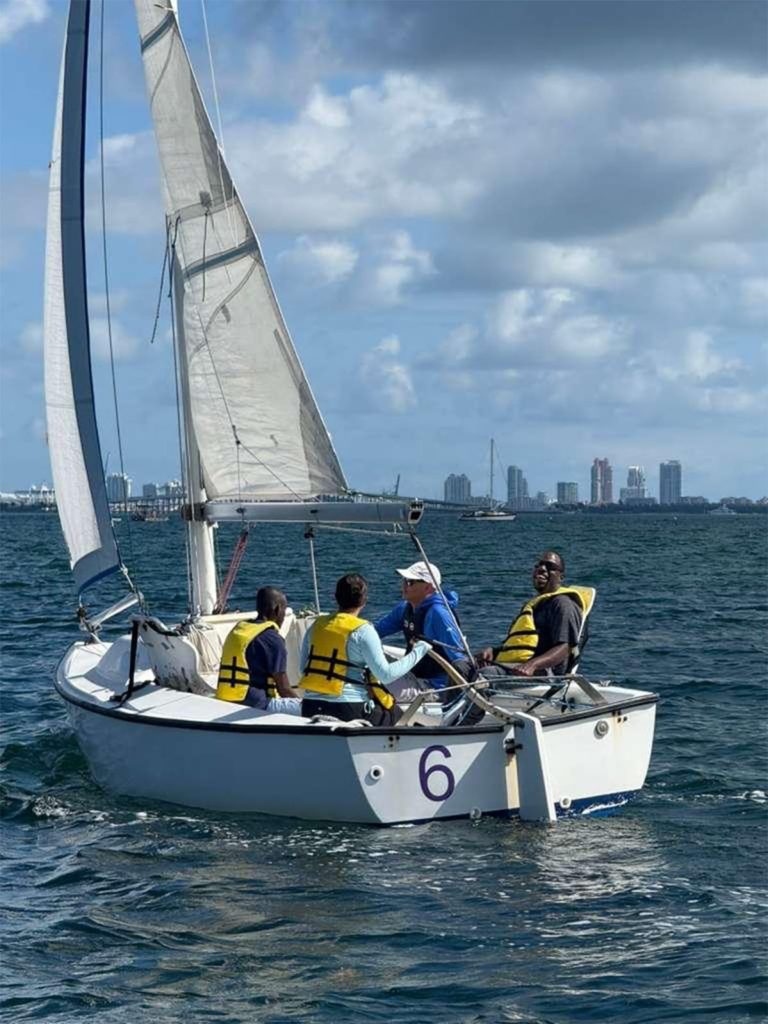
For many of my students, much of their daily lives is shaped by others managing what is important, often leaving them with limited opportunities to take meaningful responsibility. Out on the water, that dynamic shifts.
When they take the tiller, sometimes for the first time, they feel a sense of control and agency that is both unfamiliar and yet liberating. They begin to understand the outcomes of their actions, and most importantly, how to plan ahead before making a move with the tiller. They grow, and you, as an instructor, will grow as well.
You see their eyes light up when they steer the boat, and their self-esteem soars when they successfully tie their first clove hitch or flawlessly name all the parts of the boat. Fulfillment was found at all skill levels.
On my boat, we are crew members and I address them as such. Whatever burdens or labels they carry stay on shore.
These experiences have reshaped my understanding of sailing itself. When I realized that having a non-cooperative body or mind on land meant nothing when it came to sailing a boat, I began to see sailing in a new light.
Sailing enriches both their lives and mine. It is a sport that can be taught but must be lived and experienced. That is the beauty of it: every day feels like another lesson learned.
About the Author
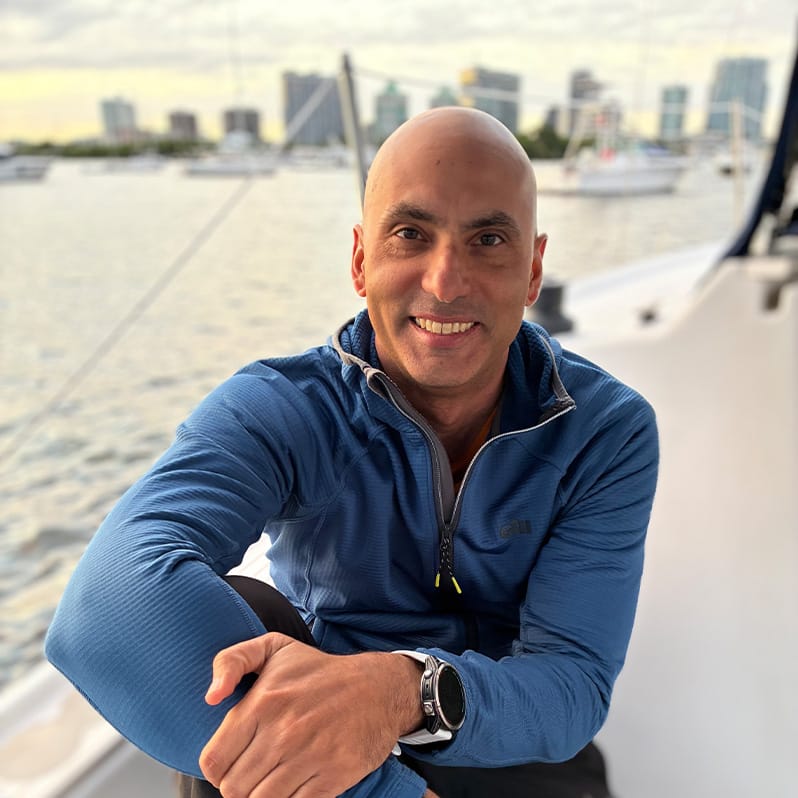
Giovanni Profeta is a sailing instructor specializing in ASA 101, teaching both youth and adults with a focus on sailors with physical and intellectual disabilities. He is passionate about making sailing accessible and empowering for everyone on the water. Alongside instruction, Giovanni is an avid regatta racer who competes in events across the United States. He has also crewed on multiple offshore sailing assignments throughout the Caribbean and through the Panama Canal, building broad experience in both competitive and cruising environments.
Join The Discussion
-
How can adaptive instruction turn hesitation into confidence?
How can instructors balance safety and independence when empowering students with physical or cognitive differences to take the helm? Read more in the article by Giovanni Profeta
https://americansailing.com/articles/learning-to-sail-beyond-limitations/
americansailing.com
Learning to Sail Beyond Limitations
Learning to Sail Beyond Limitations shows how adaptive sailing builds confidence independence and skill for sailors of all abilities.



Log in to reply.