




By Christy McFerren
Guiding the Next Generation of Sailors: Inside The Art of Teaching on the Water with Jenny Wight
In sailing, instructors are more than teachers. They’re a translator of wind, water, and canvas. They are purveyors of confidence. Every lesson is a balancing act between safety and independence, structure and freedom, instruction and discovery. And for many instructors, especially those working with adult learners, that balance can be one of the most challenging parts of the job.
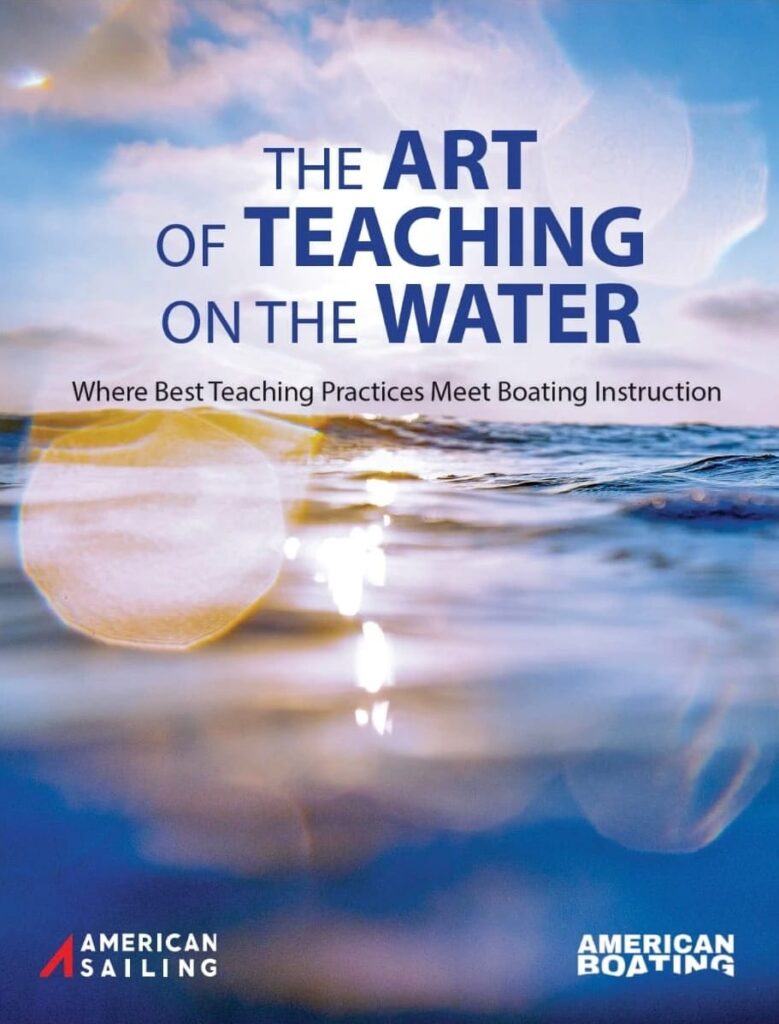
That’s exactly where The Art of Teaching on the Water comes in.
Written by lifelong educator and sailor Jenny Wight alongside a team of contributors, the book offers a thoughtful, experience-driven guide for instructors navigating the daily challenge of teaching on the water. It’s not so much about what to teach; it’s about how to teach in a way that resonates with students and simultaneously makes the instructor’s life easier and more rewarding.
A Career Shaped by Water and Learning
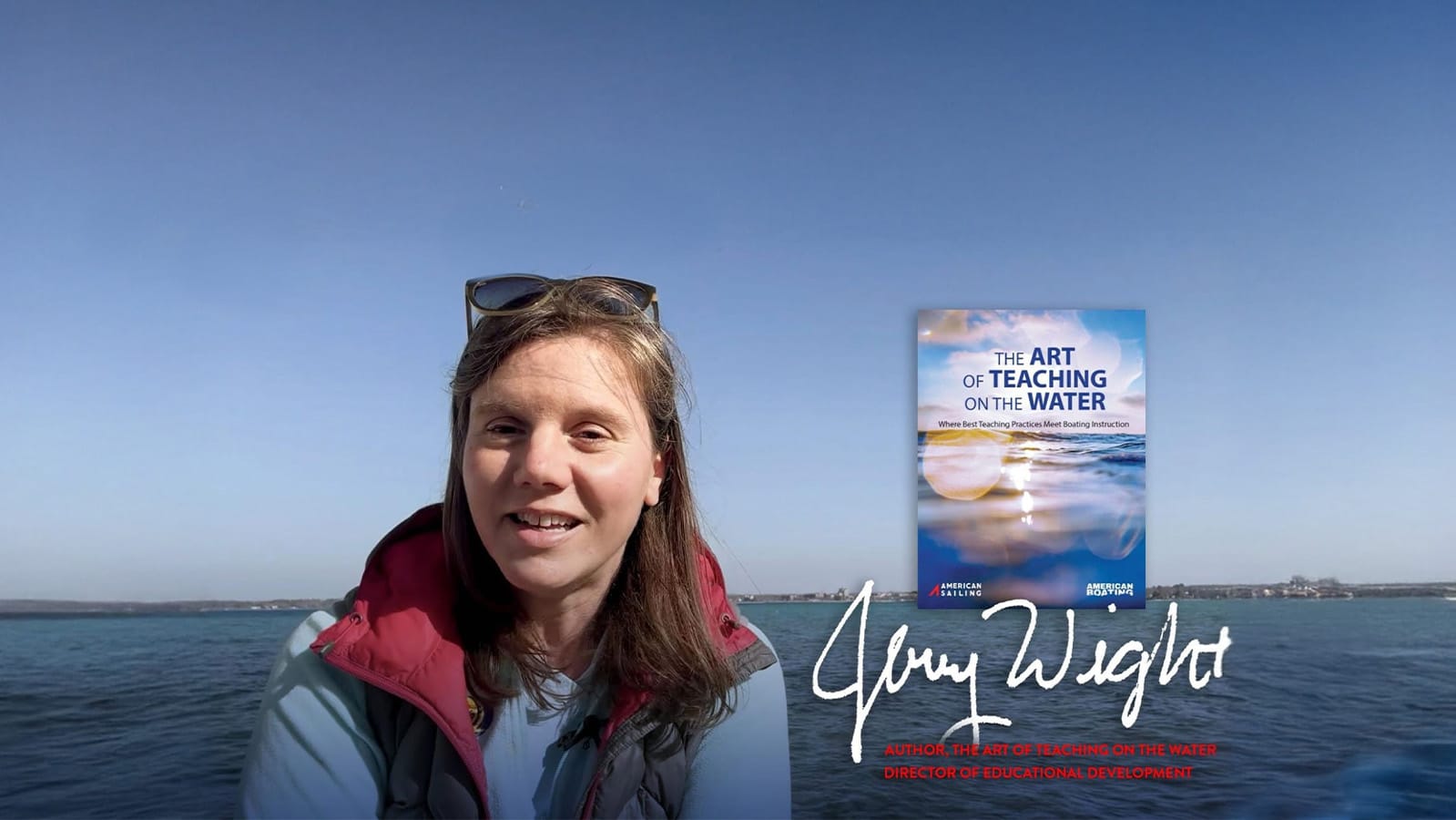
Jenny Wight has worked as a sailing instructor, a captain, and a sailing school director, all of which have given her a firsthand understanding of both the technical and human sides of teaching sailing.
Before fully stepping into the marine world, she spent 15 years teaching in public schools and another 5 years as a private tutor. Her academic background as a Reading Specialist from Central Michigan University shaped her approach to working with diverse learners, an influence that continues to define her work today.
Now serving as Director of Educational Development at American Sailing and American Boating, Wight brings together decades of experience across classrooms and coastlines. She also leads a Women on the Water group on Lake Michigan and races weekly with her Melges 24 crew, staying actively engaged in the community she serves.
Why Instructors Need a Guide
“Instructors need a guide.”
That simple idea sits at the heart of The Art of Teaching on the Water. As Wight explains through the book’s core message, instructors spend so much time helping others find their way that they rarely have time to reflect on their own methods.
This book fills that gap.
It tackles the trickier, often overlooked aspects of teaching: organizing lessons, handling challenges, maintaining energy and inspiration, and adapting to different learning styles. It acknowledges the fact that teaching has grown for the better, a truth many instructors feel but rarely articulate.
Today’s students don’t respond to rigid, top-down instruction. They learn best when given autonomy, when they’re encouraged to experiment, make mistakes, and try again. The goal isn’t perfection; it’s progress.
Wight’s work reframes the instructor’s role as a facilitator of growth rather than a director of outcomes.
A Modern Philosophy of Teaching on the Water
One of the most compelling aspects of Wight’s approach is how seamlessly she blends traditional seamanship with modern educational philosophy.
She emphasizes that adult learners, in particular, need a sense of ownership in the learning process. They want to understand not just how to perform a maneuver, but why it works. They benefit from being given space to think, adjust, and even fail safely.
This shift requires instructors to let go of the idea that their job is to produce perfect sailors.
Instead, their role is to build capable, confident ones.
That means:
- Structuring lessons with flexibility
- Encouraging decision-making on the water
- Allowing room for mistakes without judgment but with reflection
- Reinforcing progress rather than perfection
It’s a philosophy rooted in trust, both in the student and in the process.
A Resource for Every Instructor
While the book is deeply thoughtful, it’s also highly practical. Wight and the team of contributors designed it to meet instructors wherever they are in their journey.
For new instructors, it offers a framework: how to organize lessons, manage time, and approach common teaching challenges without feeling overwhelmed.
For experienced instructors, it serves as a reset button. It challenges habits that may have become automatic and encourages reflection on what’s working and what isn’t.
At its core, the book is about growth: not just for students, but for instructors themselves.
Wight encourages readers to revisit the material often, to discuss it with peers, and to engage in ongoing conversations about teaching. Because, as she emphasizes, collaboration leads to stronger instructors and better learning experiences.
Building a Global Teaching Community
Through her work with American Sailing and American Boating, Wight is part of a broader mission: connecting instructors from around the world.
Sailing may take place in different waters, from inland lakes to open oceans, but the challenges of teaching are remarkably similar everywhere. By sharing ideas and approaches, instructors can learn from one another and elevate the entire community.
That sense of connection is woven throughout the book. It’s not just a guide. It’s an invitation to be part of a larger conversation about what great teaching looks like on the water.
You can join some of these conversations live and in real-time through her monthly At the Helm series of live discussions available to active American Sailing and American Boating instructors and affiliates. Active instructors can access At The Helm sessions through the Sailor Portal.
Watch the Interview with Jenny
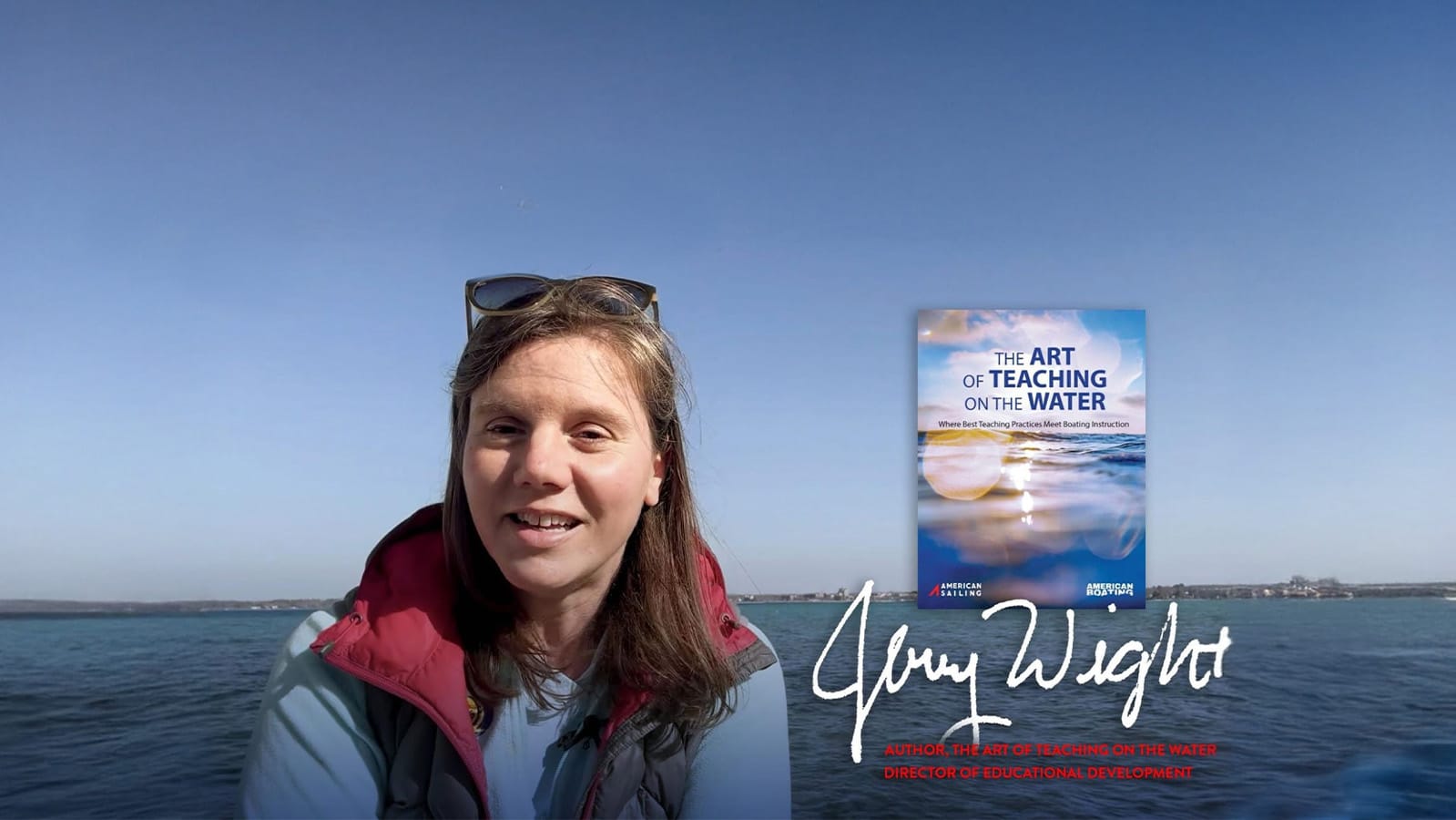
Jenny Wight discusses her new book written for American Sailing, The Art of Teaching on the Water
Jenny discusses the book in this interview, answering key questions such as:
- What inspired her to write The Art of Teaching on the Water
- How more than 20 years of teaching both kids and adult sailors has shaped her approach
- Who the book is truly for – and how it serves both new and seasoned instructors
- Whether teaching techniques apply equally to male and female instructors, and what differences she’s observed in how instructors connect with students
- And much more
The Lasting Impact of Better Teaching
At its heart, The Art of Teaching on the Water is about evolution. Wight encourages instructors to stay curious, to keep experimenting, learning, and refining their approach. A confident student becomes a capable sailor. A capable sailor becomes a lifelong participant in the sport. And a thriving sailing community depends on both.
By equipping instructors with better tools, clearer frameworks, and a renewed sense of purpose, Jenny Wight’s work ultimately strengthens the entire sailing ecosystem.
And perhaps that’s the most important takeaway of all:
When instructors grow, everyone benefits.
From the first hesitant tack to the moment a student takes the helm with confidence, the journey begins with someone willing to teach, not just well, but thoughtfully.
The Art of Teaching on the Water ensures those instructors don’t have to navigate that journey alone.
Available today in the American Sailing store.
About the Author
Christy McFerren is a sailor and sailing instructor holding American Sailing certifications 101–106, 114, and 201–202. She is a member of the Austin Yacht Club sailing instruction team and Catalina fleet, and prior to that completed her 100-level certifications with Outbound Sailing. Christy sails most weekends on Lake Travis in Austin, Texas, with her husband and son aboard Doxa, their Catalina 27, and has bareboat chartered throughout the Caribbean. She’s also a PADI scuba instructor at Dive World Austin and a private pilot who loves exploring above, on, and below the waves.

Join The Discussion
-
What makes a truly great sailing instructor?
Jenny Wight explores modern teaching philosophies, student psychology, and practical strategies in her article on The Art of Teaching on the Water. Read more about how thoughtful instruction shapes confident, capable sailors: https://americansailing.com/articles/the-art-of-teaching/
americansailing.com
Jenny Wight shares modern teaching strategies to help sailing instructors build confident, capable sailors on the water.
Sorry, there were no replies found.
Log in to reply.