




The concept of sailing is widely known and understood. In simplest forms, it is wind in a sail and a boat moving through the water. The art of cruising is a bit more elaborate in that to cruise you set off from one point and aim for your next destination. When sailing becomes more complicated we define our roles on a boat in a more detailed fashion, seamanship comes into play.
Seamanship can be described as the art of operating a vessel. Seamanship involves working as part of a crew and when the occasion arises, leading a crew in the role of a skipper and every aspect of a boat from being tied up to the dock to the operation in open water. A proficient seaman creates a culture of awareness, safety, and confidence in the crew and the operation of a vessel at all times.
Preparation for a daysail is different than for a multi-day voyage. Understanding what goes into properly being prepared for advanced cruising is what ASA 106 – Advanced Coastal Cruising will prepare you for.
What You’ll Learn in ASA 106 – Advanced Coastal Cruising
Able to safely act as skipper and crew of a sailing vessel about 30 to 50 feet in length in coastal and inland waters, in any conditions.
You’ll expand your knowledge of:
- Wind, Sailing forces and Sail trim:
- Weather and resources for predicting conditions
- Seamanship
- Engineering and the operation and troubleshooting of the vessel
You will build your skills:
- Night Sailing
- Skippering a vessel on an overnight cruise of at least 48 hours
- Anchoring both as helmsman and crew
- Standing watch of at least 20 miles by night and 20 miles by day
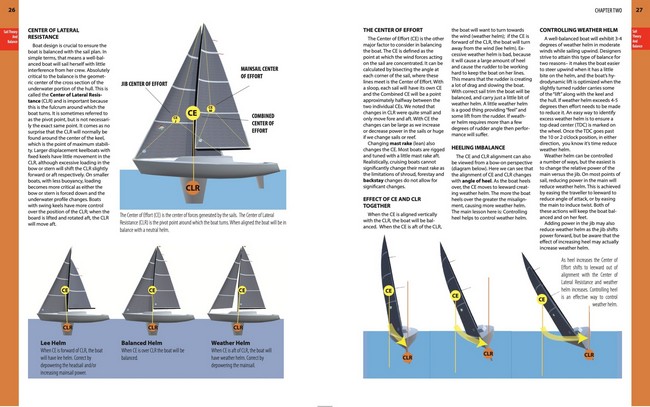
ASA 106 expands upon your knowledge of Sail Theory and Balance:
- Describe sailing forces using diagrams. Graphically find the center of effort and center of resistance of sails and keel, respectively.
- Describe with the aid of diagrams the causes of lee and weather helm and methods of correcting them. Include the reasons for preference of slight weather helm, sail selection (including full sails or reefed sails), mast position and mast rake.
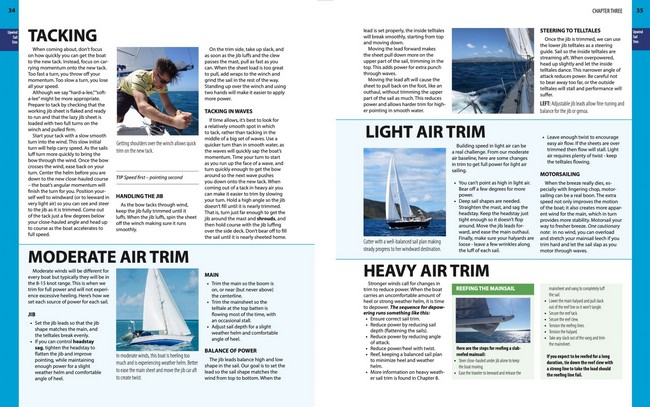
- Describe sail shapes and sail interactions as needed for different wind strengths and points of sail. Describe the effects on sail shape and sail interactions when adjusting components aboard the vessel.
You will:
- Perform the duties of skipper and crew on a liveaboard coastal cruise of at least 48 hours, including night sailing.
- As helmsman, demonstrate the proper techniques of beating, reaching, running, tacking, jibing, heading up, bearing away and luffing in approximately 20 knots of wind.
- Work to weather to best advantage accounting for wind shifts, tides, current and local geography.
- Sail a compass course within +/- 10 degrees with sails trimmed.
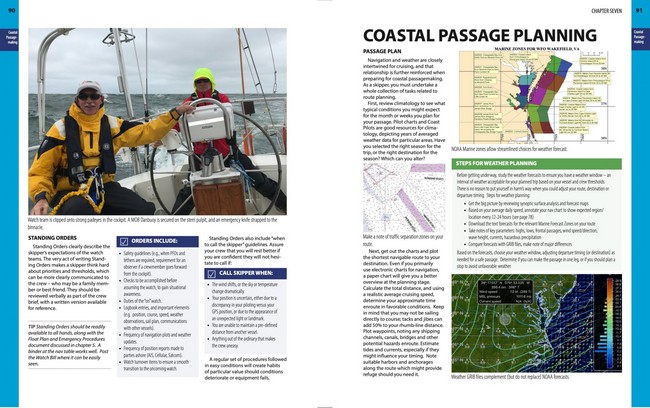
You will stand a navigation watch during a passage of at least 20 miles by night and 20 miles by day and demonstrate all of the skills elements in ASA 105, Coastal Navigation.
Engineering skills include but are not limited to:
Describe appropriate measures for the following common engine problems:
- Stoppage in fuel line
- Burned and defective points
- Fouled spark plug/injector problems
- Carburetor icing (spring and fall sailing)
- Unserviceable starter
- Electrolysis
Describe the minimum pre-season inspection and maintenance for the following:
- Hull (including underwater fittings, electrical systems, painting, antifouling)
- Spars and rigging (including electrolysis)
- Sails
- Safety
ASA 106, Advanced Coastal Cruising covers 42 skills that must be completed to earn certification. Upon completion, you will be able to skipper and navigate a sailing vessel of approximately 30 to 50 feet in length in coastal and inland waters, in any conditions, day or night. Knowledge of sail theory and steering forces, advanced sail control, weather prediction using clouds and instruments, boat systems maintenance, heavy weather precautions, safety, and seamanship.
Take a look at all the skills that you will master in the ASA Certification page: https://americansailing.com/certifications/asa-106-advanced-coastal-cruising/
Find a school to earn your ASA 106, Advanced Coastal Cruising Certification.: https://americansailing.com/find-sailing-school/
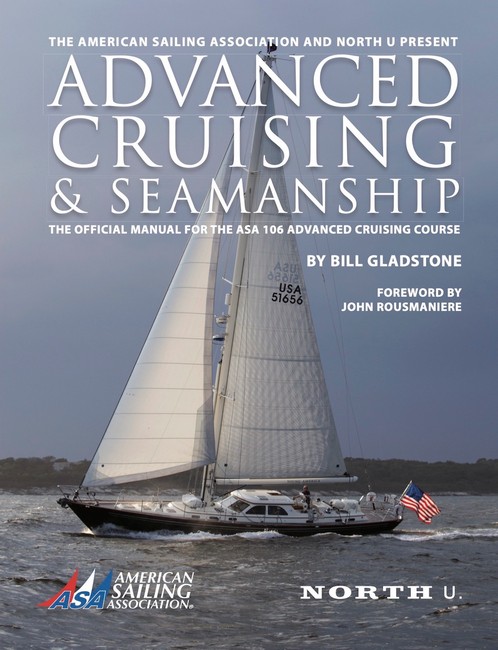
Take a look at the all-new Advanced Cruising & Seamanship textbook.