
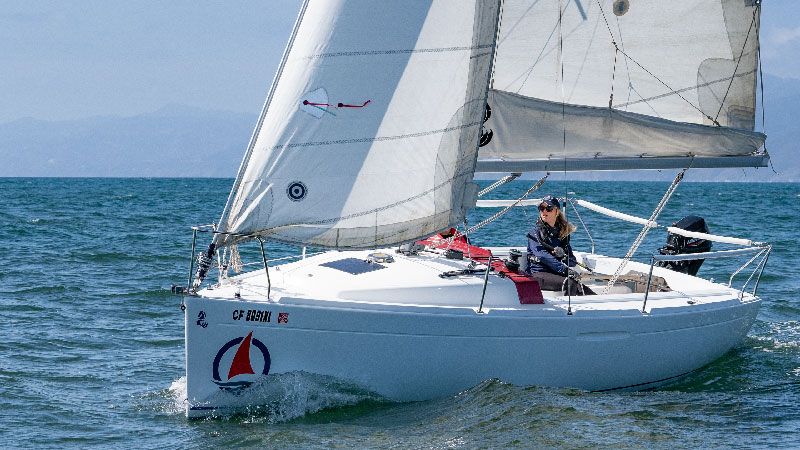
Refine your sail trim, boat handling, and maneuvering skills while learning good crewmanship and teamwork.
Home ⁄ Learn To Sail ⁄ Certifications ⁄ ASA 101, Keelboat Sailing 1
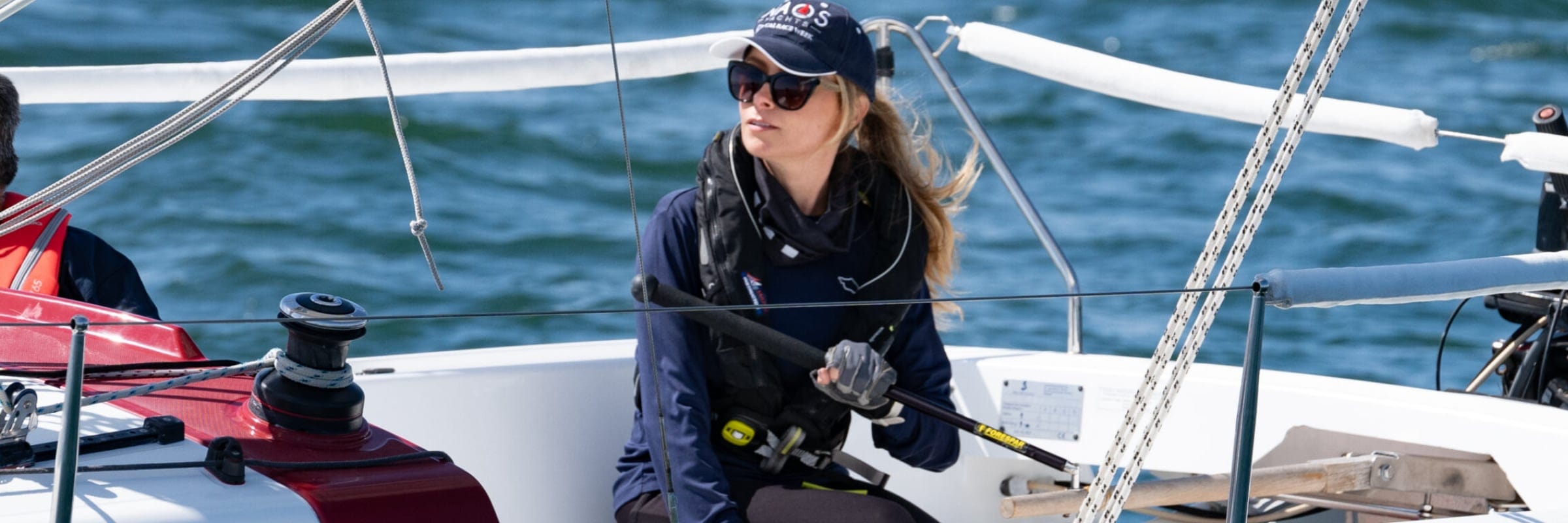
ASA 101 Keelboat Sailing 1Welcome to the beginning of your formal sailing education.
Welcome aboard to ASA 101, the gateway to sailing adventure! This foundational course sets the stage for mastering the art of sailing. With expert instruction, you’ll learn the language of sailing and essential skills like hoisting sails, tacking, and navigating safely on the water, while gaining the confidence to take command of your own vessel. ASA 101 is more than just a class—it’s your first step toward a lifestyle of freedom and exploration. Embrace the wind, chart your course, and embark on the unforgettable journey that sailing offers!
WHAT YOU'LL LEARN
Upon completing the ASA 101 Basic Keelboat Sailing course, you’ll be equipped to skipper a sloop-rigged keelboat ranging from 20 to 27 feet in length, confidently navigating in daylight and in light to moderate conditions, with winds up to 15 knots. You’ll master the essentials of sailing—everything from basic terminology and sail trim to helm commands, seamanship, and the all-important rules of navigation to keep you clear of hazards. The course covers the fundamentals of safe sailing, with auxiliary power operation as an added bonus. It’s your ticket to a lifetime on the water.
101 CERTIFICATION STANDARDS
It’s important to understand that simply enrolling in an ASA 101 course and attending classes doesn’t automatically guarantee certification. Our commitment is to the safety and competence of every sailor who takes to the water, which is why we’ve developed rigorous curriculum standards. These standards are designed to ensure you receive the highest quality education, equipping you with the skills and confidence you need to handle a boat safely. From sail trim to navigation, we hold you to a high standard, so when you earn your certification, you know you’re truly ready to skipper with skill and confidence. Safety isn’t just a lesson—it’s our priority, and these standards are what set you up for success on the water.
Download a PDF of the basic skills learned in this course. When you enroll in a certification course with a school, you will be taught each of these skills. Your ability to demonstrate these skills on the water and in the written exam determines whether you receive a certification or if you need more practice before receiving the certification.
To be successful in earning the certification, we highly recommend you study all available materials so that your time in class is used efficiently and effectively.
STUDY MATERIALS
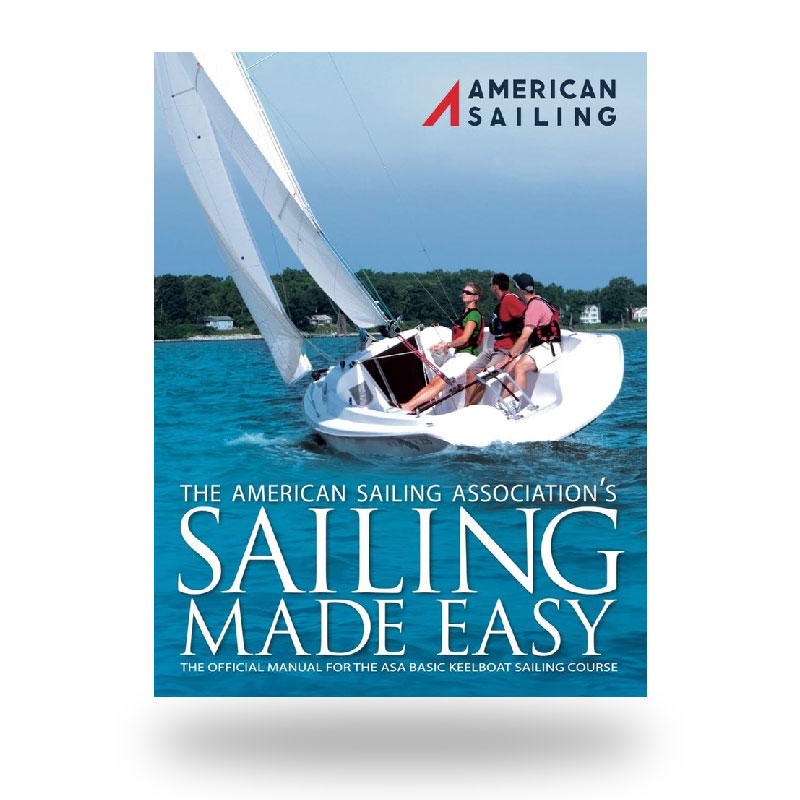
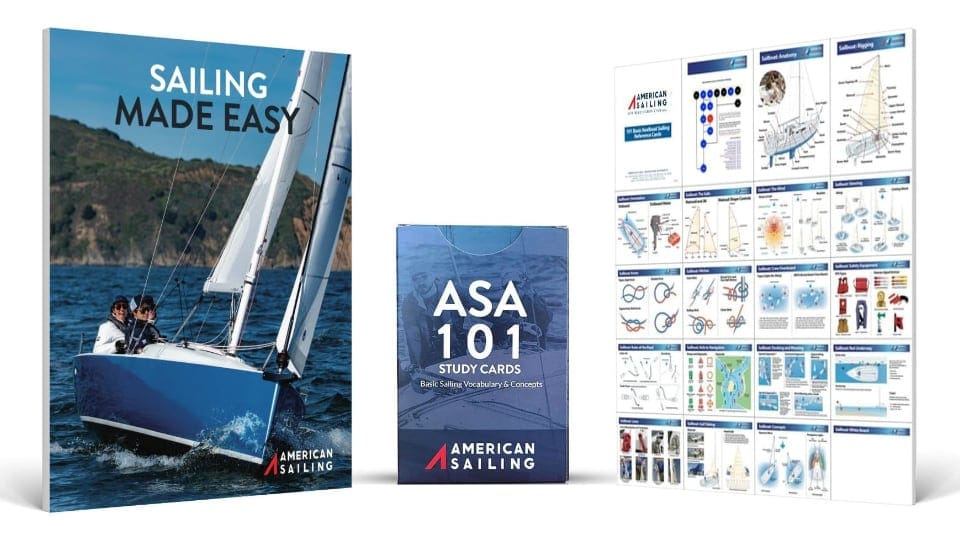
TEXTBOOK
Sailing Made Easy
Understand the sailing skills you must learn and demonstrate to receive your certification.
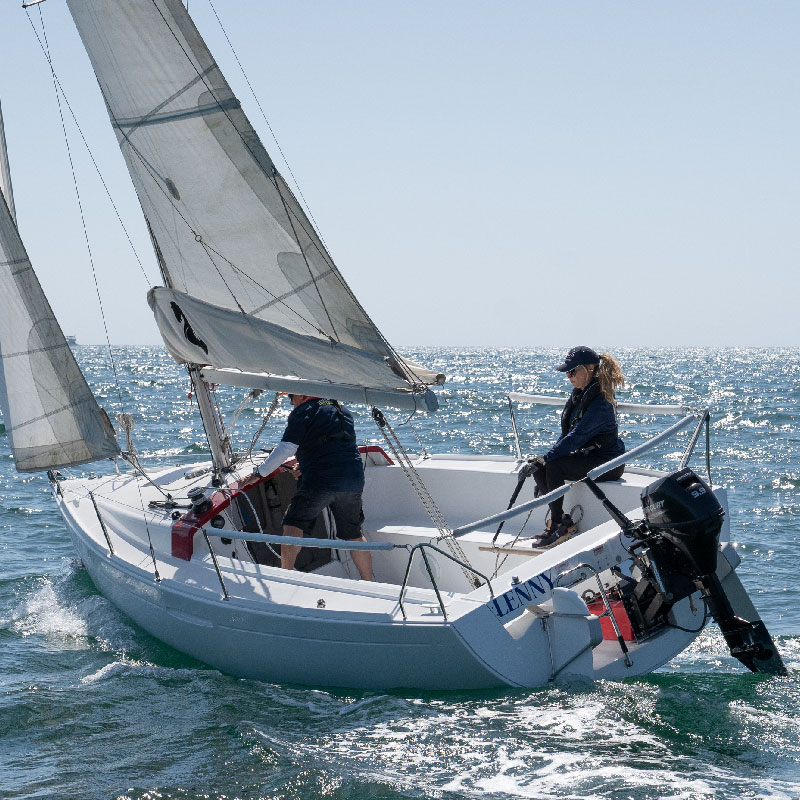
ONLINE PREP CLASS
ONLINE INTRO TO SAILING
Prepare for the on-the-water course by taking this informative online class.
ONLINE QUIZ
GET THE QUIZ BUNDLE
Get quizzes that help prepare you for the written test portion of your certification.
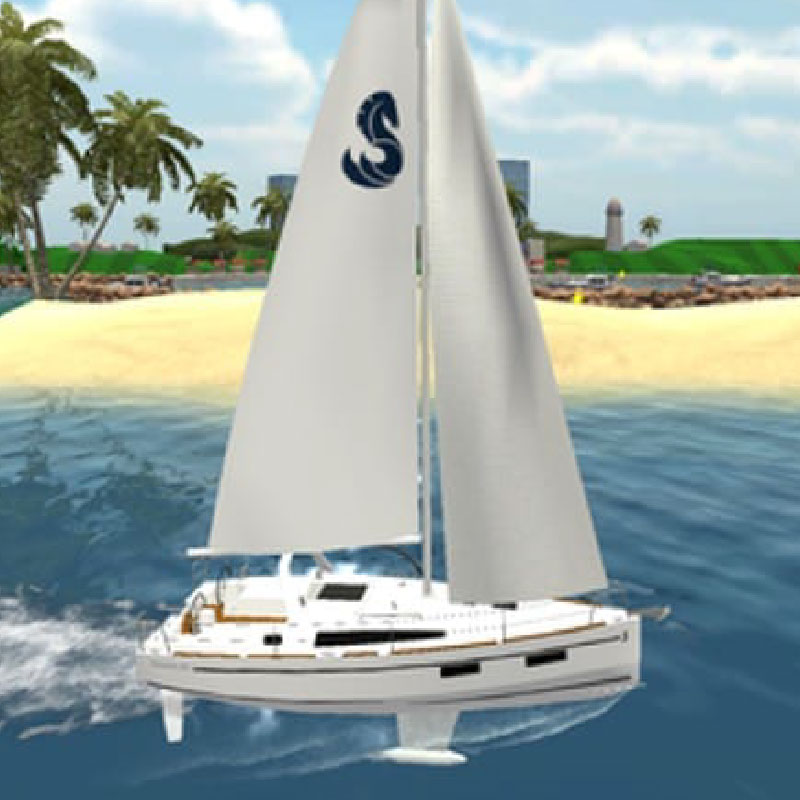
APP
SAILING CHALLENGE
Practice points of sail and learn basic knots in our interactive app. Download on Apple or Google.
Ready to Get Underway?
BECOMING A SAILOR IS A SIMPLE. 3-STEP PROCESS
frequently asked questions
Do I need any sailing experience before taking ASA 101?
No. ASA 101 Keelboat Sailing 1 is designed for complete beginners. There are no prerequisites, making it the perfect starting point for anyone interested in learning to sail.
What will I learn in ASA 101?
You’ll learn the core fundamentals of sailing, including sailboat terminology, points of sail, sail trim, helm commands, navigation rules, docking, knots, safety procedures, and essential maneuvers such as tacking, jibing, and crew overboard recovery. By the end of the course, you’ll have the knowledge and practical skills needed to safely skipper a 20 to 27-foot keelboat in light to moderate conditions.
How long is the ASA 101 course?
Most ASA 101 courses are taught over two full days, though schedules may vary by sailing school. You’ll spend time both in the classroom and on the water learning and practicing your new skills.
Do I automatically receive my certification after taking the course?
What is the student-to-instructor ratio?
The typical student-to-instructor ration is 4 to 1. You can expect lots of hands on practice as you work to master basic sailing skills, as well as time to observe your fellow classmates. Many sailing schools also offer private or semi-private instruction, if you prefer a 1-1 learning experience.
What should I bring to my first sailing class?
Most students should bring:
- Non-marking shoes
- Hat and sunglasses
- Sunscreen
- A light or waterproof jacket
- Water and lunch
- Sailing gloves (optional but recommended)
- Your ASA Logbook (if you have one)
- A pen or pencil for the written exam
Your instructor will typically provide a personal flotation device (PFD) if you don’t already have one.
Do I need to study before class?
Yes. Reviewing the Sailing Made Easy textbook and the Online Intro to Sailing course before arriving will help you get more out of your time on the water. Many students also use the practice quizzes to prepare for the written exam.
What is an ASA Logbook?
Your ASA Logbook serves as your official sailing record. It stores your certification seals, documents your sea time, and tracks your sailing experience as you progress through additional ASA certifications. Over time, it becomes a valuable record recognized by sailing schools, charter companies, and employers around the world.
What do I receive after completing ASA 101?
Upon successful completion, you’ll receive:
- An official ASA 101 certification
- An instructor-signed ASA Logbook entry
- An ASA 101 Certification Sticker
- A 90-day ASA Membership trial
Your certification demonstrates that you’ve met American Sailing’s standards for safe and competent keelboat sailing.
How do I find an ASA-certified sailing school?
American Sailing has hundreds of certified sailing schools worldwide. Choosing an ASA-certified school ensures you’ll receive standardized, high-quality instruction that follows the same curriculum and certification standards no matter where you learn.
What comes after ASA 101?
ASA 101 is the foundation of your sailing journey. Many sailors continue with ASA 103 Basic Coastal Cruising, ASA 104 Bareboat Cruising, participate in local races, join flotillas or sailing vacations, and eventually earn an International Proficiency Certificate (IPC) for chartering internationally.
Is ASA certification recognized internationally?
Yes. American Sailing certifications are recognized by sailing schools, charter companies, and sailing organizations around the world. Continuing through the certification pathway can also qualify you for an International Proficiency Certificate (IPC), which is accepted in many countries for yacht chartering.
WHAT'S NEXT
ASA 103
Coastal Cruising
Prepares sailors for more advanced and independent cruising aboard larger boats and navigating coastal water.
ASA 104
Bareboat Cruising
Gain the skills and confidence to skipper a mid-sized cruising boat on multi-day trips, managing all aspects of boat and crew responsibilities.
ASA 105
Coastal Navigation
Learn traditional navigation skills and methods to explore new cruising grounds and handle the ever-changing conditions of coastal waters.
ASA 106
Advanced Coastal Cruising
Learn more advanced techniques and seamanship required to navigate coastal waters confidently in all weather conditions, day or night.
ASA 107
Celestial Navigation
ASA 107 Celestial Navigation is for sailors who want to master the timeless art of navigating by the stars