


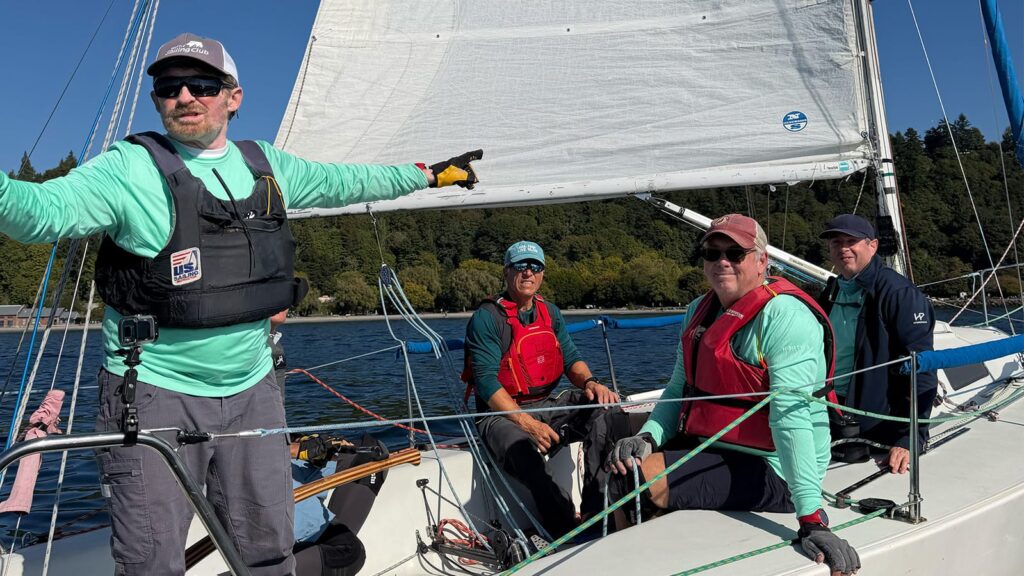
Online class overview
This online class focuses on the “big picture” of racing: the environmental factors that shape the racecourse and how to turn them into a winning game plan. You’ll learn how wind, pressure, shifts, current, waves, and geography combine to create favored sides and passing lanes, and how to gather the information you need before the start and throughout the race. We’ll cover how to separate strategy (where you want to go) from tactics (how you deal with the boats in your way), how to set clear objectives for each leg, and how to manage risk based on your position and goals. The central idea is simple and powerful: race the course, not the fleet. When your decisions are driven by what the racecourse is doing instead of what the boat next to you is doing, you’ll find yourself in the right place more often, and the fleet will start following you.
Who is this online class for?
This online class is for any racer who has ever rounded the windward mark wondering how half the fleet got there first. It’s for skippers who want a plan, tacticians who want a process, and crew who want to contribute more than “puff coming!” (though that’s still appreciated). If your current strategy is “follow the good boat” or “go the way we went last time,” this online class will give you something much better. It’s also a great fit for sailors new to racing who want to build good decision-making habits from the start, and for cruisers who want to understand why the wind and current behave the way they do. No advanced racing experience required, just curiosity and a willingness to look out of the boat.
What will I learn?
You’ll come away with a practical framework for building a race strategy from the ground up: how to read the environmental factors that shape every racecourse, how to gather and weigh information before and during the race, and how to turn that information into clear, objective-driven decisions. You’ll learn to identify the favored side, recognize when the plan needs to change, and manage risk with confidence, so you spend less time reacting to the fleet and more time sailing the course the way it wants to be sailed.
List of topics:
- Strategy vs. tactics: why knowing the difference wins races
- Reading the wind: oscillating vs. persistent shifts, pressure, and velocity
- Geographic effects: shorelines, headlands, thermals, and sea breeze
- Current and tide: how to find it, predict it, and use it
- Pre-race homework: forecasts, tide tables, local knowledge, and pre-start observations
- Gathering information on the water: compass work, wind lines, and reading other boats
- Setting objectives for each leg and adjusting as the race develops
- Risk management: when to play the odds and when to protect your position
- Racing the course, not the fleet