




By Christy McFerren
Table of contents
- The History of Earth Day: A Movement that Started at Sea
- Why Sailors Are Uniquely Positioned to Lead
- 7 Practical Earth Day Actions for Responsible Sailors
- 1. Choose Reusables Over Single-Use Plastics
- 2. Use Eco-Friendly Cleaning & Care Products
- 3. Respect Wildlife and Sensitive Habitats
- 4. Reduce Your Carbon Footprint Beyond the Sails
- 5. Dispose of Waste Properly
- 6. Be a Clean Wake in Your Community
- 7. Speak Up for the Water
- Earth Day as a Seamanship Principl e
- Become a Sailor. Become a Steward.
- Ready to come aboard?
- Join The Discussion
The History of Earth Day: A Movement that Started at Sea
Every sailor knows a truth that people on land sometimes forget: the health of the planet is written first on the water.
You see it in a clean harbor at dawn. You hear it in the slap of wake against a hull. You feel it in a steady breeze, a clear horizon, and the return of seabirds to familiar anchorages. Long before environmental issues become headlines, mariners notice when something has changed.
That is why it is fitting that the catalytic event behind Earth Day began not in a forest or city park—but in the ocean.
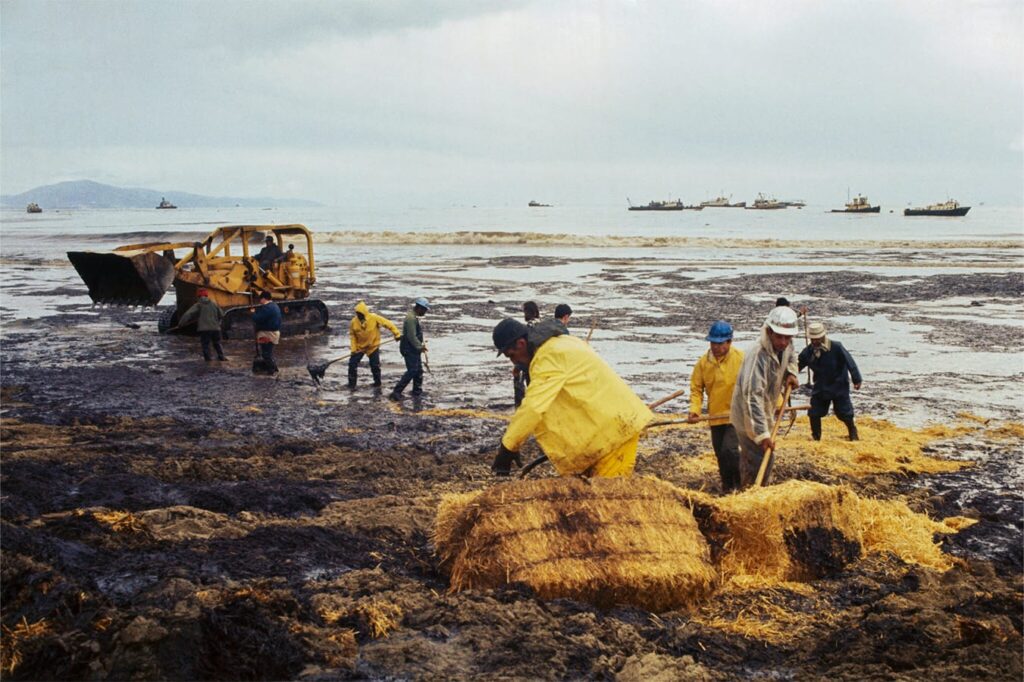
In January 1969, the Santa Barbara oil spill released millions of gallons of crude oil into the waters off California, blackening beaches and damaging marine habitat along roughly 30 miles of coastline. Images of oil-soaked birds, polluted surf, and devastated shoreline shocked the nation. Public outrage over the disaster became one of the driving forces behind the first Earth Day in 1970 and helped usher in landmark environmental laws such as the National Environmental Policy Act (NEPA). In many ways, modern environmental consciousness began with an ocean emergency.
So much of our awareness of the natural world is rooted in the sea. Rivers run to it. Weather rises from it. Life depends on it. And like all streams, this too goes back to the sea.
As sailors, we have a special responsibility to protect what we love.
The Earth is covered by approximately 71% water. That means when we care for oceans, lakes, bays, estuaries, and rivers, we are caring for most of the living surface of our planet. For the American Sailing community—students, instructors, cruisers, racers, charter guests, and lifelong dreamers—that responsibility is not abstract. It is practical, immediate, and personal.
We are not just visitors on the water. We are stewards of it.

Why Sailors Are Uniquely Positioned to Lead
Sailing already teaches many of the values Earth Day celebrates.
We move with the wind rather than against it. We learn patience instead of brute force. We depend on currents, tides, weather systems, and ecosystems we did not create and cannot control. Sailing rewards humility, awareness, and partnership with nature.
That makes sailors natural ambassadors for conservation.
When someone learns to trim sails, read clouds, anchor responsibly, or navigate changing conditions, they also learn that the marine environment is not scenery—it is a living system. The same waters that carry our boats support fisheries, regulate climate, produce oxygen, and sustain coastal communities.
At American Sailing, helping people become sailors means helping people build a lifelong relationship with the water. And relationships create responsibility.
7 Practical Earth Day Actions for Responsible Sailors
Oceana, the largest international advocacy organization dedicated solely to ocean conservation, encourages boaters to make everyday choices that reduce waste, protect wildlife, and preserve waterways through its Green Boater guidance.
Here are ways every sailor can make a meaningful difference this Earth Day—and every day after.
1. Choose Reusables Over Single-Use Plastics
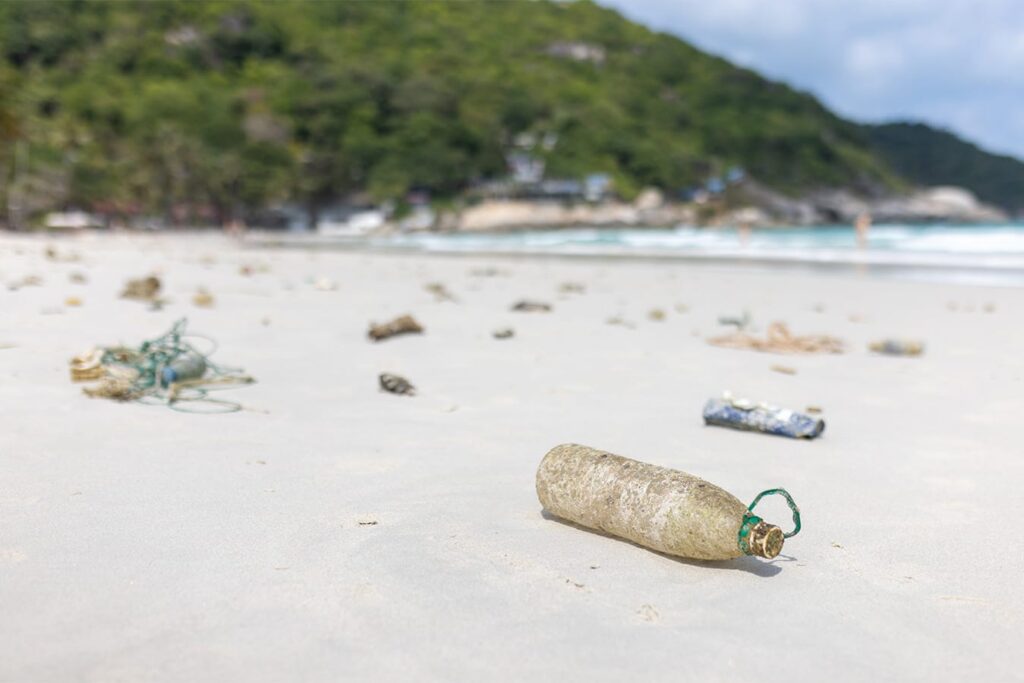
Plastic pollution does not start offshore. It starts with convenience items used onshore and forgotten underway.
Swap disposable water bottles for refillable ones. Use reusable food containers, mugs, utensils, and shopping bags. Provision with durable bins instead of flimsy packaging when possible.
A single weekend sail can generate very little trash when you plan ahead.
The less plastic you bring aboard, the less chance it has of becoming marine debris.
2. Use Eco-Friendly Cleaning & Care Products
Many common soaps, degreasers, and cleaners contain chemicals that eventually wash into marinas, harbors, and coastal ecosystems.
Choose biodegradable, phosphate-free, marine-safe products whenever possible. Use only what you need. Spot-clean instead of rinsing chemicals overboard. Better yet, prevention beats cleanup. Routine maintenance often eliminates the need for harsh cleaners later.
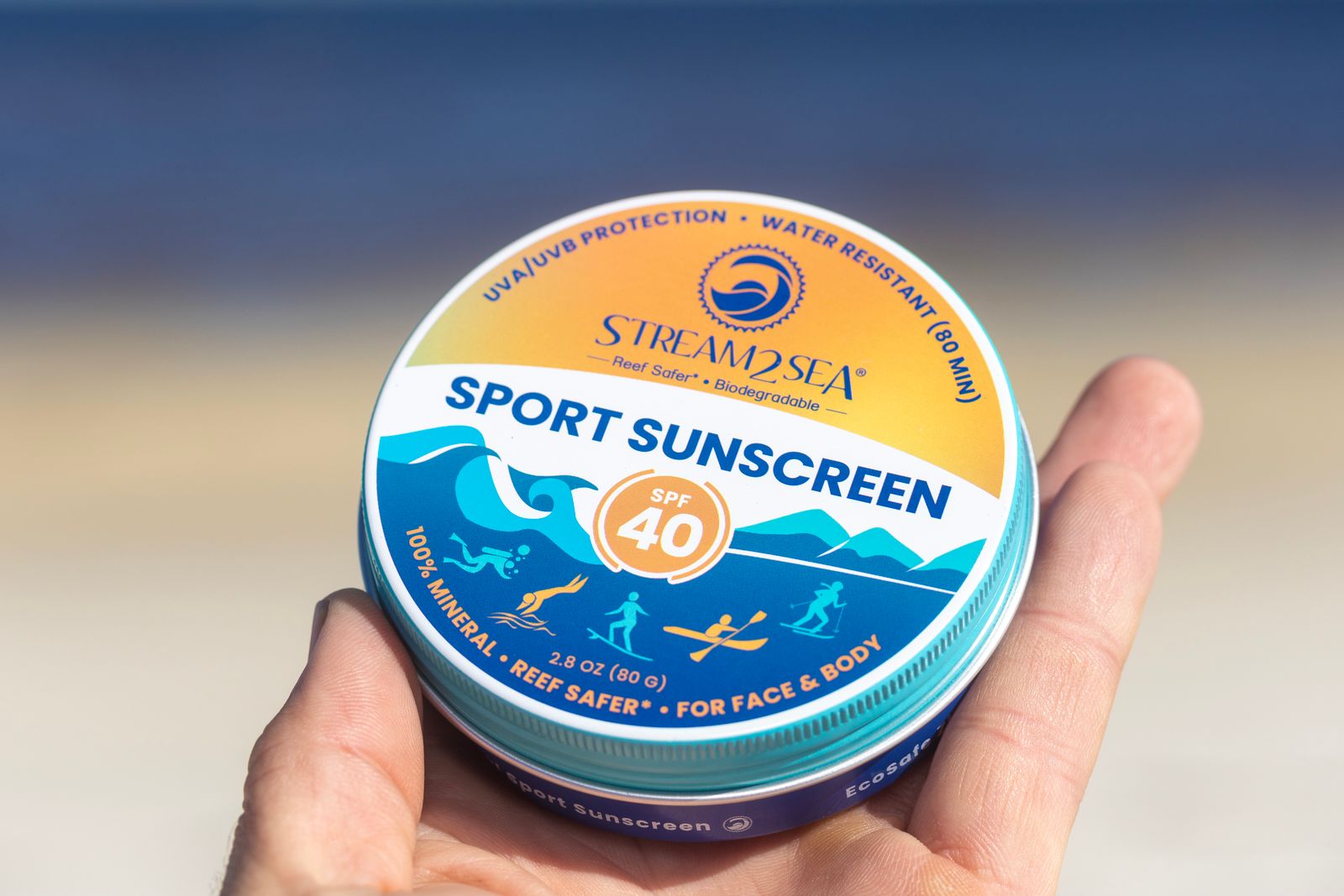
When selecting sunscreen for your days out on the water, make your selection from many brands which now offer reef-safe alternatives to the chemicals which can harm not only our bodies but the reefs we love to explore. Stream2Sea offers a discount for American Sailing members, and has been proven to not only preserve but actually foster the growth of ocean reefs.
3. Respect Wildlife and Sensitive Habitats
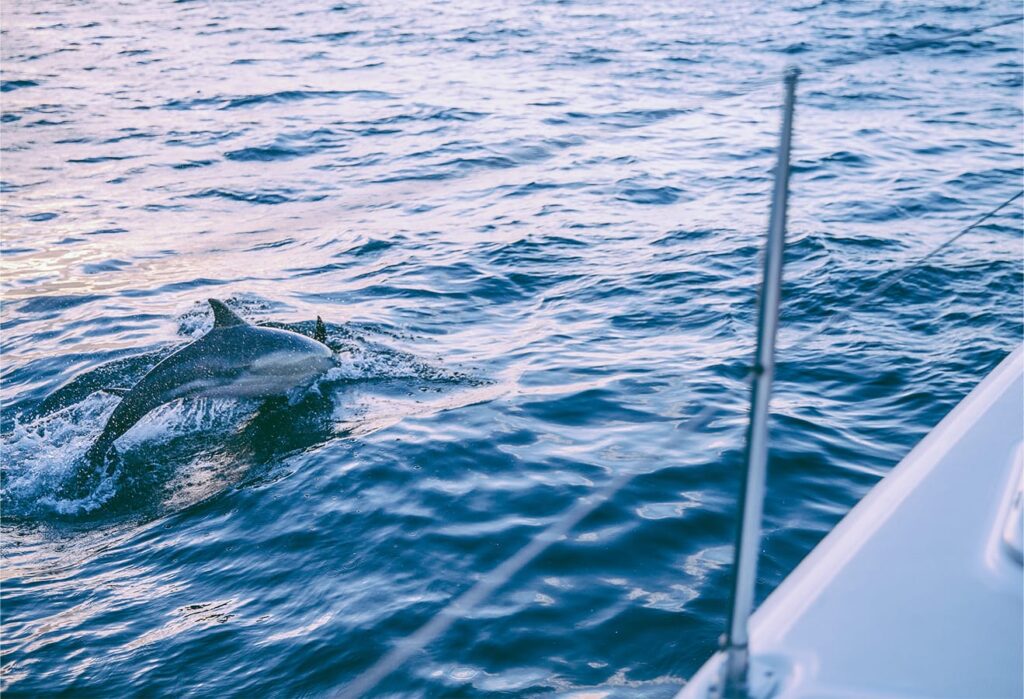
One of sailing’s great gifts is proximity to wildlife—dolphins riding the bow wave, pelicans diving, rays gliding beneath clear water, turtles surfacing unexpectedly.
Enjoy these moments without disturbing them.
Keep distance from marine mammals and nesting birds. Slow down in sensitive habitat zones. Avoid anchoring on coral, eelgrass, or seagrass beds when alternatives exist. Use mooring balls where provided.
The goal is simple: leave wildlife wild.
4. Reduce Your Carbon Footprint Beyond the Sails
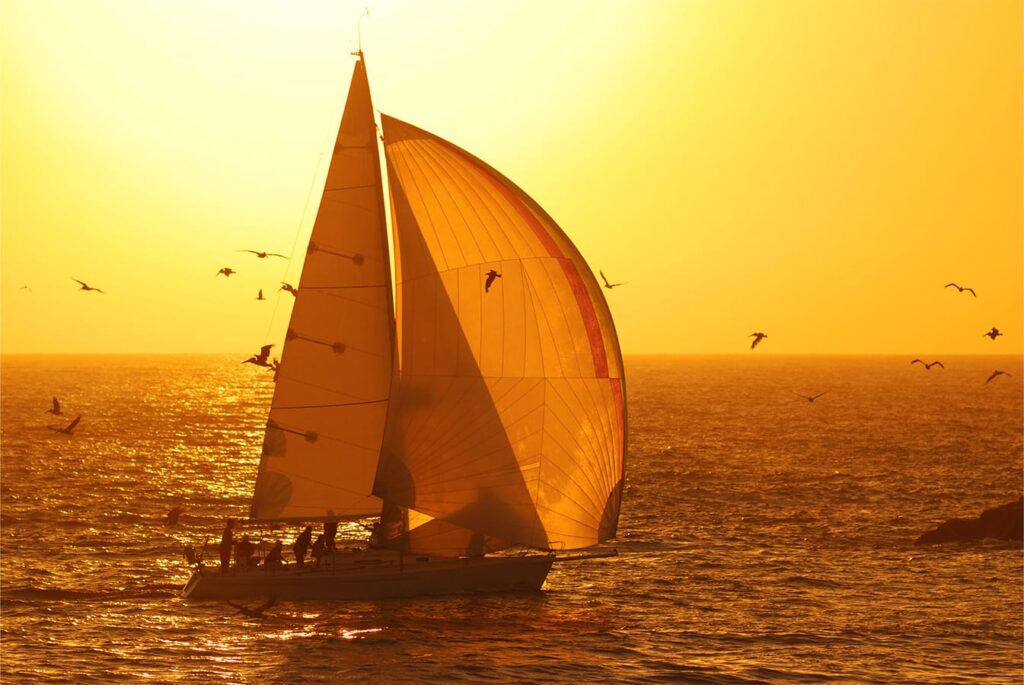
Sailing is one of the most elegant low-energy ways to travel on water, but many trips still involve fuel use through engines, dinghies, tow vehicles, and shore power.
Small changes matter:
- Sail when conditions allow instead of motoring
- Maintain engines for efficiency
- Combine errands and provisioning trips
- Carpool to the marina
- Upgrade to LED lighting
- Minimize engine idling at the dock
A sailboat under canvas is already part of the solution. Lean into that advantage.
5. Dispose of Waste Properly
Nothing goes overboard except what belongs there.
Use pump-out facilities. Separate recyclables when available. Secure trash onboard so wind cannot scatter it. Dispose of oil, batteries, solvents, and old flares through approved facilities.
The ocean is not an “away.” There is no throwing something away at sea.

6. Be a Clean Wake in Your Community
Stewardship is contagious.
Pick up litter at the launch ramp. Join a marina cleanup day. Help a new sailor learn good habits early. Support regattas and clubs that reduce waste and run sustainable events. Encourage sailing schools and marinas to phase out unnecessary disposables.
Culture changes when enough people normalize better choices.
7. Speak Up for the Water
Oceana encourages boaters not only to change personal habits but also to advocate for healthier waterways.
That can mean supporting clean water protections, marine habitat restoration, responsible fisheries management, and smart coastal planning. Vote with the environment in mind. Support organizations doing effective work. Attend local meetings when shoreline access, marina policy, or watershed issues are on the agenda.
Healthy water depends on informed citizens.
Earth Day as a Seamanship Principle
Good seamanship is really environmental ethics in practice.
You inspect before departure. You prepare for changing conditions. You avoid hazards. You think ahead. You leave margin for error. You respect forces larger than yourself.
Those same principles apply to caring for the planet.
Earth Day is not just about celebration—it is about maintenance, foresight, and responsibility. It is preventative care for the systems that sustain life.
Sailors understand this instinctively because neglect has consequences on the water. Ignore weather, systems, charts, or tide, and reality responds quickly. The environment works the same way.
Become a Sailor. Become a Steward.
At American Sailing, every new student who learns to sail gains more than a skill. They gain perspective.
They learn where the wind comes from. Why currents matter. How weather moves. Why clean harbors matter. Why protected anchorages matter. Why a healthy ocean matters.
To become a sailor is to become connected.
And connection is the beginning of care.
This Earth Day, remember that the movement itself was sparked by an ocean in distress. The sea helped awaken environmental responsibility in America. Today, it calls again—not only through warning, but through beauty, joy, and invitation.
Go sailing. Bring someone new. Leave the shoreline cleaner than you found it. Use less. Notice more. Protect what you love.
Because sailing is for everyone.
And stewardship is for every sailor.
Ready to come aboard?
This year, join Sailors for the Sea and pledge to be a champion for our oceans and waterways. By signing up today, you will receive Oceana’s digital Green Boating Guide filled with pages of pragmatic advice for activities on and off the water. Additionally, throughout the year, they will provide you with information on how to reduce your impact and opportunities to stand up for our seas.
About the Author
Christy McFerren is a sailor and sailing instructor holding American Sailing certifications 101–106, 114, and 201–202. She is a member of the Austin Yacht Club sailing instruction team and Catalina fleet, and prior to that completed her 100-level certifications with Outbound Sailing. Christy sails most weekends on Lake Travis in Austin, Texas, with her husband and son aboard Doxa, their Catalina 27, and has bareboat chartered throughout the Caribbean. She’s also a PADI scuba instructor at Dive World Austin and a private pilot who loves exploring above, on, and below the waves.

Join The Discussion
-
How do you practice stewardship when you’re out on the water?
Whether it’s reducing waste, choosing better products, or protecting wildlife, every decision matters. Read more about Christy McFerren’s article on leading the way to healthier waters.
https://americansailing.com/articles/earth-day-begins-at-sea/
americansailing.com
Earth Day Begins at Sea: A Sailor’s Call to Stewardship
Earth Day Begins at Sea: A Sailor’s Call to Stewardship explores how sailors can protect oceans through simple daily actions.
Sorry, there were no replies found.
Log in to reply.