




By Grace Lockhart
Every time I mention a weekend doing something down at my home club, I end up saying “yacht club” and wince. I can only imagine the cringe-worthy images floating though my non-sailing friends’ heads of crisp polos, pool side dining, and every other rich, white person stereotype. I find myself backpedaling to dispel any illusions of elitism, but I don’t think my point hits the mark for non- and new sailors alike.
The truth? Sailing and yacht clubs come in about as many versions as there are types of boats.
As overall membership numbers in yacht clubs across the country are dropping and pulling the average age up, the mindset of making clubs accessible is spreading like wildfire. Sure, clubs with dress codes and steep initiation fees are everywhere, but there are just as many organizations that strive to focus on affordability and accessibility to the sport.
One of the biggest barriers to joining a club is the price tag. The typical assumption is that the only option is a full fledged member with voting rights, which also comes with a one-time initiation fee.
However, almost all clubs have a many-tiered system with different membership levels. There is almost always a youth/ junior membership (which will often put membership costs towards reducing the initiation fee upon reaching adulthood). Students at any stage in life typically get a break and receive student pricing.
A growing category is reduced pricing with full membership benefits for those under 35 (ish) to help encourage younger folks to join. Don’t forget the crew/ social memberships as well. These memberships are typically heavily reduced in cost that allow full use of the club and services, but usually don’t include voting rights or the ability to store a boat (but maybe a kayak!). This is perfect for people using the club often or crewing on someone’s boat, and allows access outside of racing times for enjoying the space with friends and family.
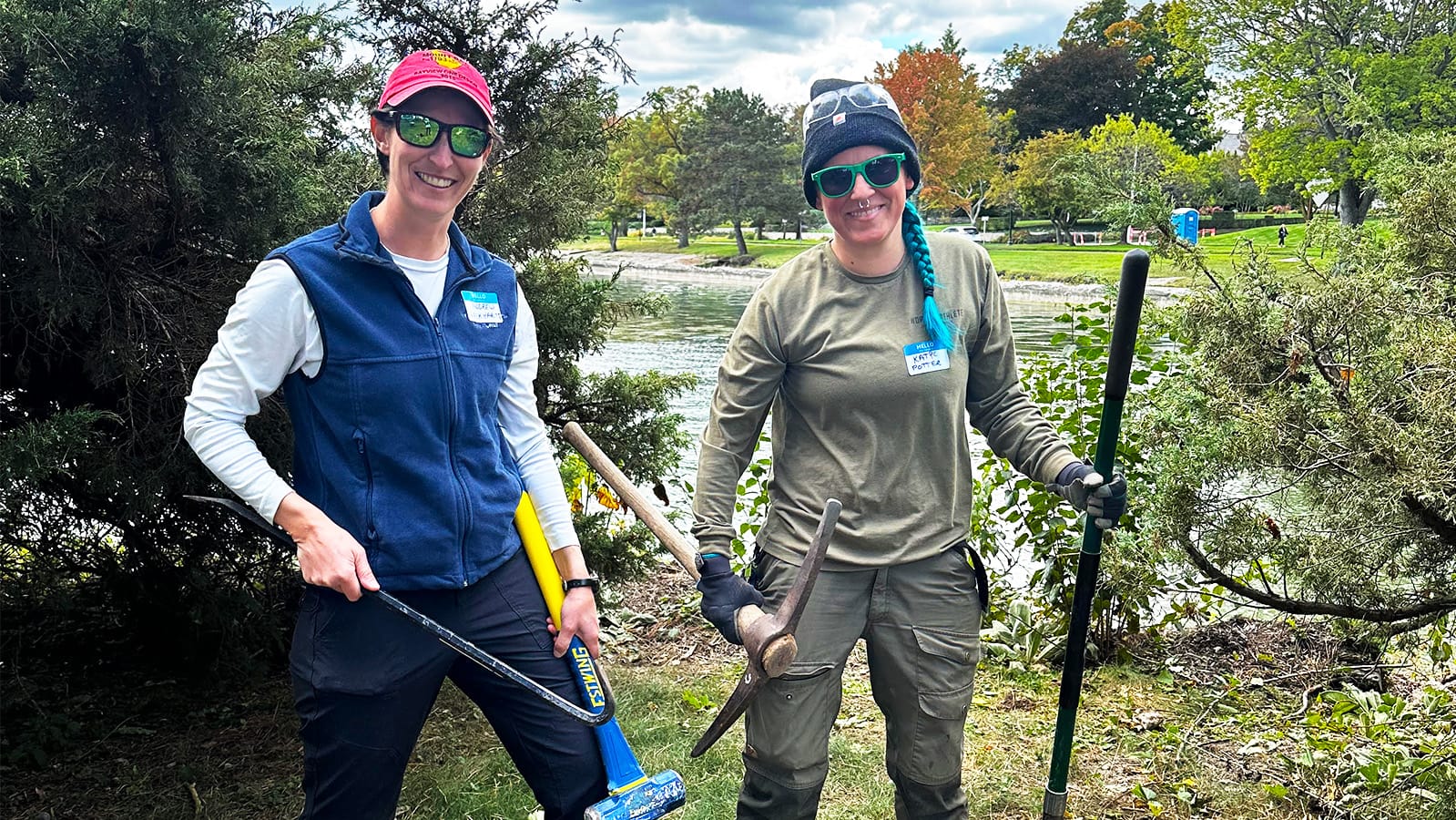
Another factor to research when looking at yacht clubs is the services. Places with a bar and restaurant may cost a bit more to cover overhead costs, with the added bonus of always seeing familiar faces when going out for dinner. If that’s not your scene, the opposite end of the spectrum includes many clubs that just have a clubhouse and a harbor. These places typically have no staff, reduced costs, and may require volunteer hours to support the operations and infrastructure of the property. The elbow grease requirement goes up, but so does the feeling of camaraderie when everyone pitches in to help.
A lot of yacht clubs do a pretty terrible job of marketing to the general public. Websites have interfaces from a decade ago, and social media accounts tend to have posts about once a year. That usually means that folks are too busy on the water to update their internet presence. The good news is that an email or a phone call usually connects you to an incredibly nice, welcoming member that can share all the details- it just takes an extra step. More good news- if it’s a club that requires work hours, updating content can be an easy way to fulfill volunteer hours.
An interesting fact is that every single adult “learn to sail” program (at least where I live) has a waiting list a mile long every summer. There is a ton of interest to get into the sport, and bridging the gap between finishing a class and joining a club is a work in progress. Programs are getting better at next steps for graduating students so that at the end of a course, there is an easy route to continue their education. Programs are developing intermediate and advanced classes for following seasons in order to continue skill mastery. Instructors work to pair students with current club members – skippers always need crew, and it’s a great way to learn and meet more sailors!
To make things easier, many adult “learn to sail” programs use club owned boats, and when the boats aren’t in class, they are sitting and ready for use. For a usually small fee, people can use the boats for the season, greatly offsetting the cost of boat ownership and still allowing access to the water.
And why should you join a club? That’s a fair question. On one hand, if you are into racing and figure out a few connections, you don’t technically really need a membership. It’s easy to show up for racing and go home and move on with your life. Pro tip: if you’re really broke and just trying to get into the sport, this is definitely the cheapest route! But a yacht club can give you so much more, and the high-cost barrier is now a thing of the past.
The biggest aspect is the community. Members come from all walks of life, and everyone is drawn together by their love of the water. There are all kinds of support, whether you’re looking to advance your sailing skills, advice on docking and seamanship, or looking for someone willing to lend a hand for boat projects. And it’s not just all about boats. My home club has members who are plumbers, lawyers, teachers, electricians, cooks, architects, nurses, and everything in between. Any kind of advice can be found for just about anything, and it’s way more fun to get help with your furnace from a sailing friend than a stranger.
The social aspect extends beyond being on the water. In Michigan, we have six months of dry land time and the social calendar at the club is packed. Euchre nights, sailing seminars, wine tastings, you name it. There is something for everyone, and it’s a fantastic way to find friends who become family.
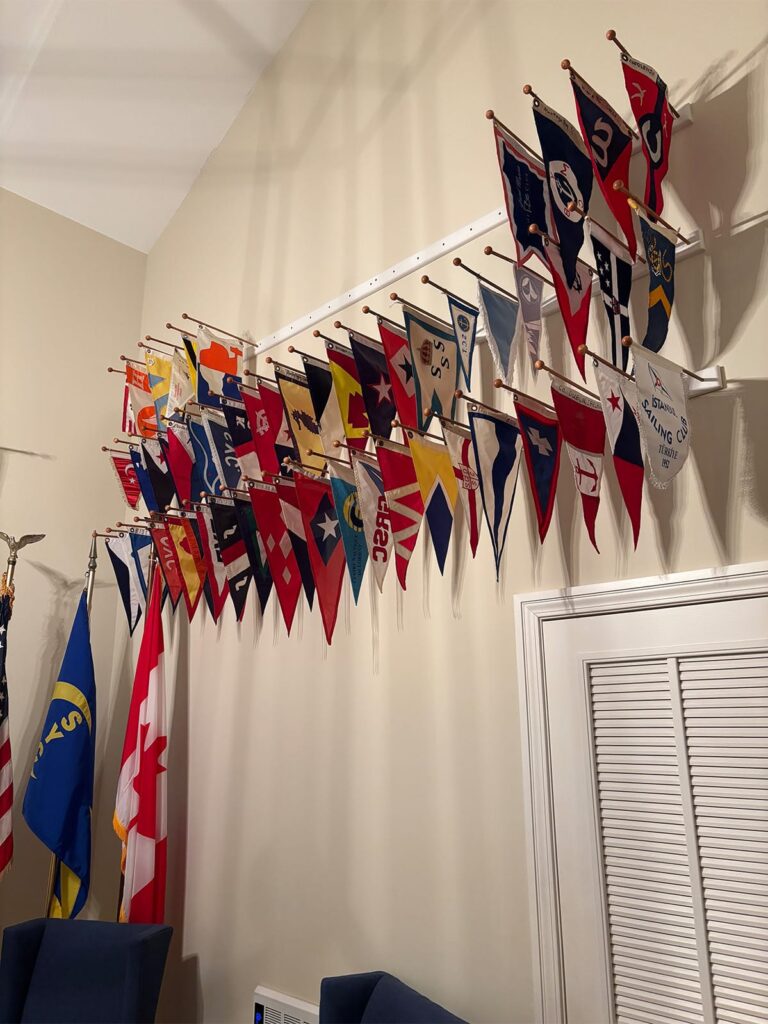
The family extends to many clubs. Most clubs have reciprocity with each other: you can travel to a different yacht club, and after signing in, you typically can dock your boat and use their facilities on a temporary basis. It’s a great way to travel and meet new people within the boating community. Depending on the experience, representatives of each club can organize a burgee exchange. It’s a centuries-old tradition to honor camaraderie and good will between clubs, and the collection of burgees is often on display, honoring past visitors and the friendliness of the community.
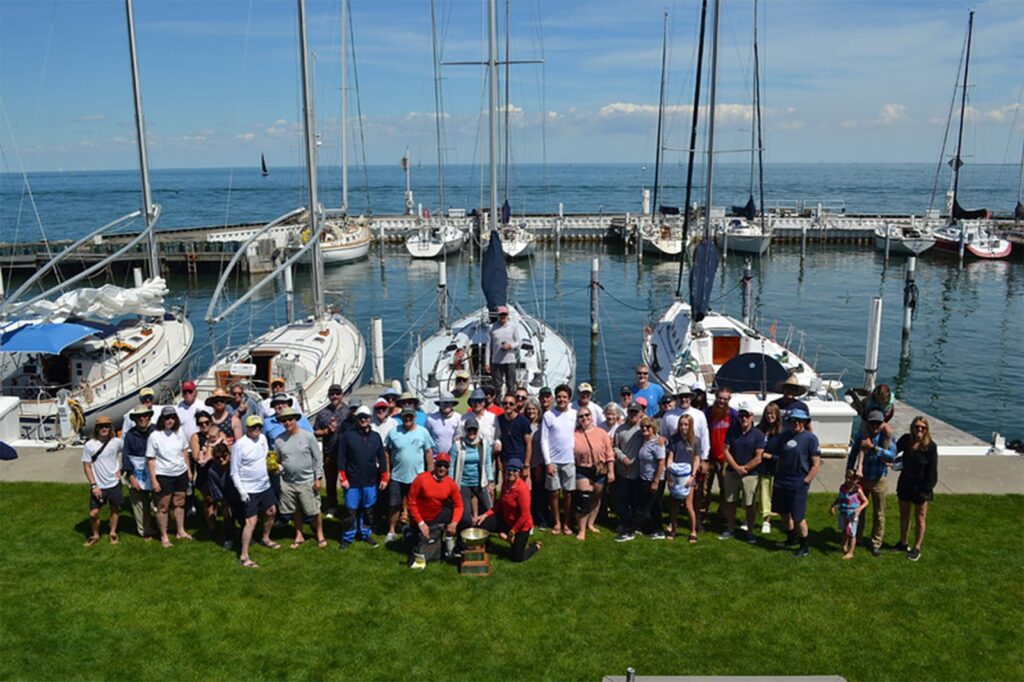
Did I mention family? I grew up at my club, and looking back, I realize how lucky I was. My parents would stick my sister and me in lifejackets and say, “go have fun!” Our other sailing kid friends were always around, and we would spend hours entertaining ourselves. We had the illusion of being unsupervised, but realistically, there were eyes on us at all times. It was a safe way to allow us to grow and play, and there was always an adult looking out. The club organizes tons of kid friendly events, and it was the best way to develop our social skills outside of school and outside our normal friend and age group.
Should you join a yacht club? I certainly hope it’s considered. We are entering a new era of accessibility, and the community of water-loving people is invaluable. We love our sport, we love our community, and the friends from our clubs end up being like family in the long run. Most importantly, we want to share that with anyone who is interested. Clubs are getting better at improving the framework to increase accessibility. So give us a call and come on down! We would love to have you!
About the Author
Grace P. Lockhart is a lifelong sailor, licensed USCG captain, and racer based in the Midwest. Balancing a desk job, racing with her husband on their Thistle, and scheming a return to cruising life, she brings both grit and storytelling flair to life on the water. Grace has worked in maritime education, volunteers to support youth and community sailing, and works to be a mentor to aspiring women sailors.

Join The Discussion
-
Are yacht clubs still exclusive, or are they becoming more accessible?
Many sailors assume yacht clubs come with high costs and barriers to entry, but that’s quickly changing. In this article, Grace Lockhart explores how modern yacht clubs are evolving with flexible memberships, lower costs, and a stronger focus on community. Read more to see how today’s clubs are opening their doors to a new generation of sailors. https://americansailing.com/articles/yacht-clubs/
americansailing.com
Yacht Clubs & the Diminishing Price Tag
Yacht Clubs and the Diminishing Price Tag explores how sailing clubs are becoming more accessible and affordable for new sailors




Log in to reply.