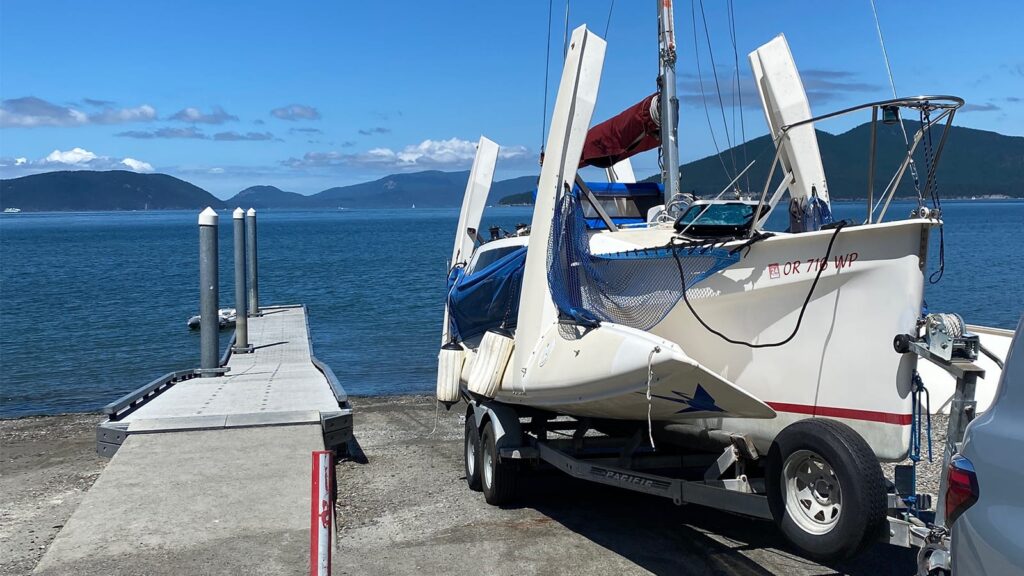

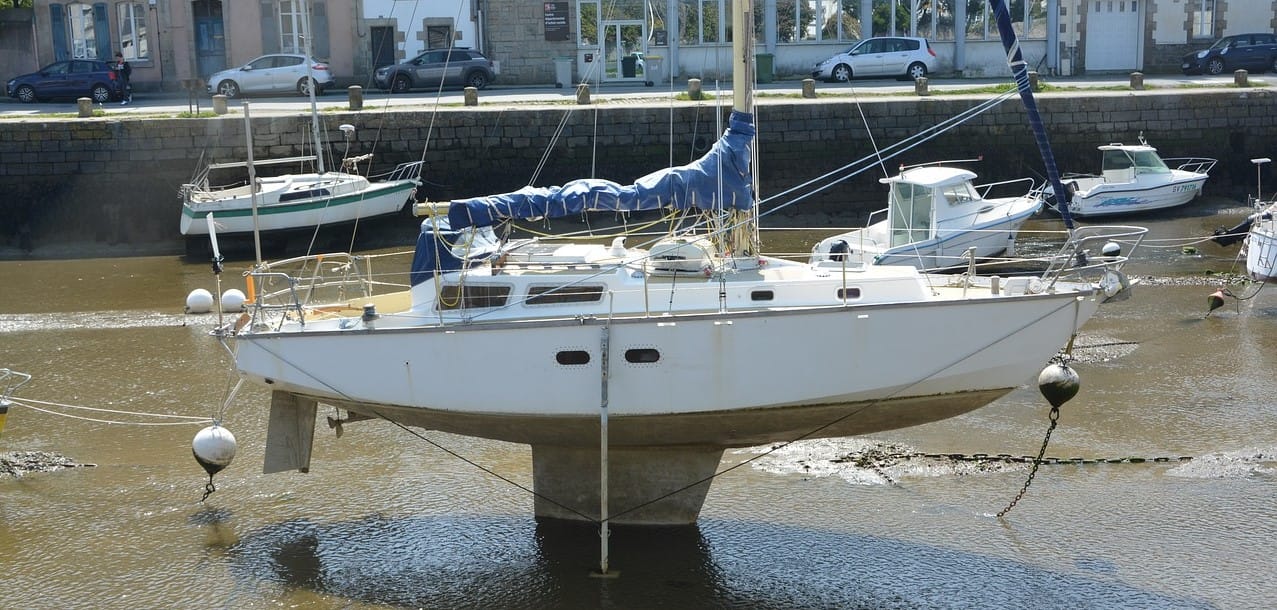




The keel is a fixed appendage on the bottom of the hull that provides the sideways resistance needed to counter the force of the wind on the sails. The keel also carries ballast, usually iron or lead, the weight of which counteracts the force of the wind that causes a sailboat to heel, or lean over. On a modern boat, the keel is shaped in the form of an airfoil wing to generate lift, which helps it sail closer to the wind.
A keelboat is generally larger than 20 feet and can be as large as a megayacht at 200 feet. A boat smaller than 20 feet without a keel is referred to as a dinghy. A dinghy has neither a keel nor a ballast. To resist sideways movement it has a centerboard or a daggerboard that can be lowered or raised as needed.
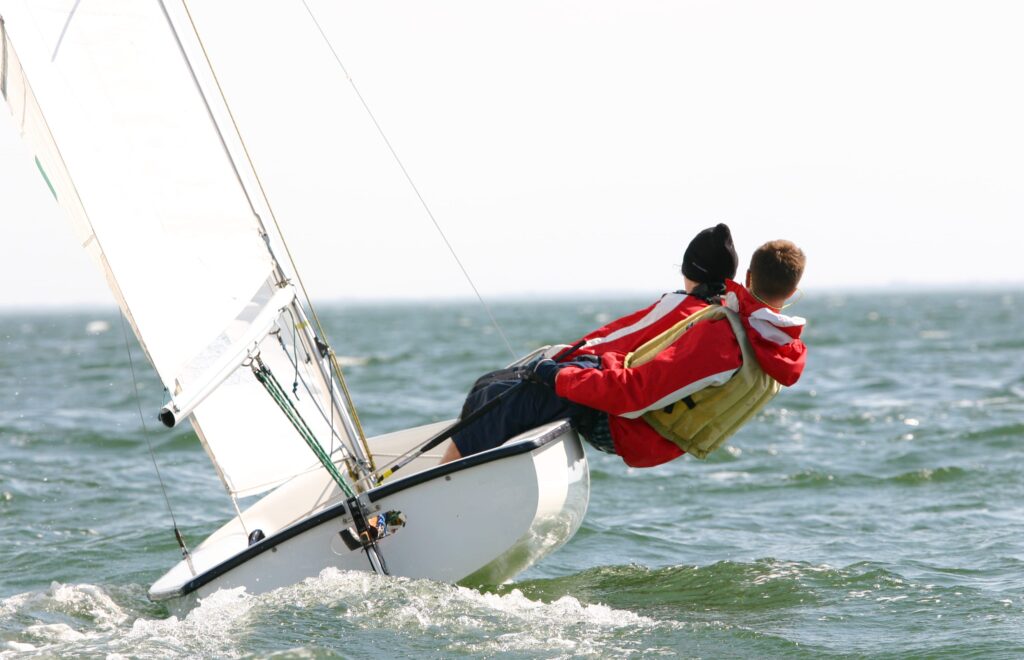
Will This Sailboat Capsize?
Unlike a dinghy, a keelboat won’t capsize. In a strong wind, it may heel a long way over, but the ballast in its keel is designed to keep it from capsizing. In a dinghy, to resist heeling you would use live ballast – the crew sitting out on the edge of the boat to counter the effect of the wind.
Smaller keelboats are often used in sailing instruction as these boats are small and responsive enough to provide the new sailor with the feel and feedback important when learning, but big and stable enough to carry an instructor and students in comfort.
The Art of Sailing
- Understanding Points of Sail The direction of the wind dictates the direction a sailboat can sail. The Points of Sail describe the range of courses a sailboat can and cannot travel.
- Understanding the Sails The sail is the driving force of the boat. A sailboat is only as good as its sails when you consider that capturing the wind’s energy is the premise behind what sailors do to propel their boats in a forward direction.
- Understanding the Wind A sailor’s world revolves around the wind and staying aware of the wind’s direction is crucial. Your ability to accurately sense changes in the wind, its speed and its direction will improve as you learn.