





by American Sailing
Table of contents
- What separates confident cruisers from frustrated boat owners?
- 1. Your Boat Is Always Teaching You Something
- 2. Organization Is a Safety Skill
- 3. Weather Doesn’t Care About Your Schedule
- 4. Docking Never Stops Being Interesting
- 5. Living Aboard Is Different Than Owning a Boat
- 6. The Small Habits Matter Most
- 7. The Best Cruising Advice Usually Comes From Experience
- Want to Sail Smarter?
- Join The Discussion
What separates confident cruisers from frustrated boat owners?
It’s rarely sail trim.
After decades of cruising, many sailors will tell you that the biggest lessons aren’t about steering a course or setting sails. They’re about preparation, organization, communication, weather awareness, and learning how to adapt when things don’t go according to plan.
During a recent American Sailing online class, veteran cruisers Jeff and Jean of Two Can Sail shared some of the practical wisdom they’ve gathered over 30 years of cruising together. While the presentation covered a wide range of topics, several themes emerged that every sailor can benefit from, whether they’re planning coastal cruises, dreaming of the Bahamas, or preparing for life aboard.
1. Your Boat Is Always Teaching You Something
One of the recurring themes throughout the class was humility.
According to Jeff and Jean, boats have a remarkable ability to expose weak habits, overlooked maintenance, and assumptions we didn’t realize we were making. Experience certainly helps, but even seasoned sailors encounter surprises.
The question isn’t whether something unexpected will happen. It’s whether you’ve built systems that help you respond when it does.
2. Organization Is a Safety Skill
Most sailors think of organization as convenience.
Experienced cruisers think of it as safety.
Can every crew member find the emergency equipment? Do you know exactly where spare parts are stored? Could someone unfamiliar with the boat locate critical systems during an emergency?
Jeff and Jean discussed why many successful cruisers create diagrams, inventories, and detailed onboard documentation. The result isn’t just a cleaner boat. It’s a boat that’s easier to operate when conditions become challenging.
3. Weather Doesn’t Care About Your Schedule

Cruisers often spend months planning an itinerary.
Weather can change it in minutes.
One of the most memorable discussions centered around the importance of flexibility. Experienced sailors learn to work with weather rather than fight it. Sometimes the smartest decision is to wait another day, change destinations, or adjust expectations altogether.
It’s a simple lesson that sounds easy in theory and becomes much harder when reservations, timelines, and expectations are involved.
4. Docking Never Stops Being Interesting
Many sailors assume docking becomes routine with experience.
Jeff and Jean offered a slightly different perspective.
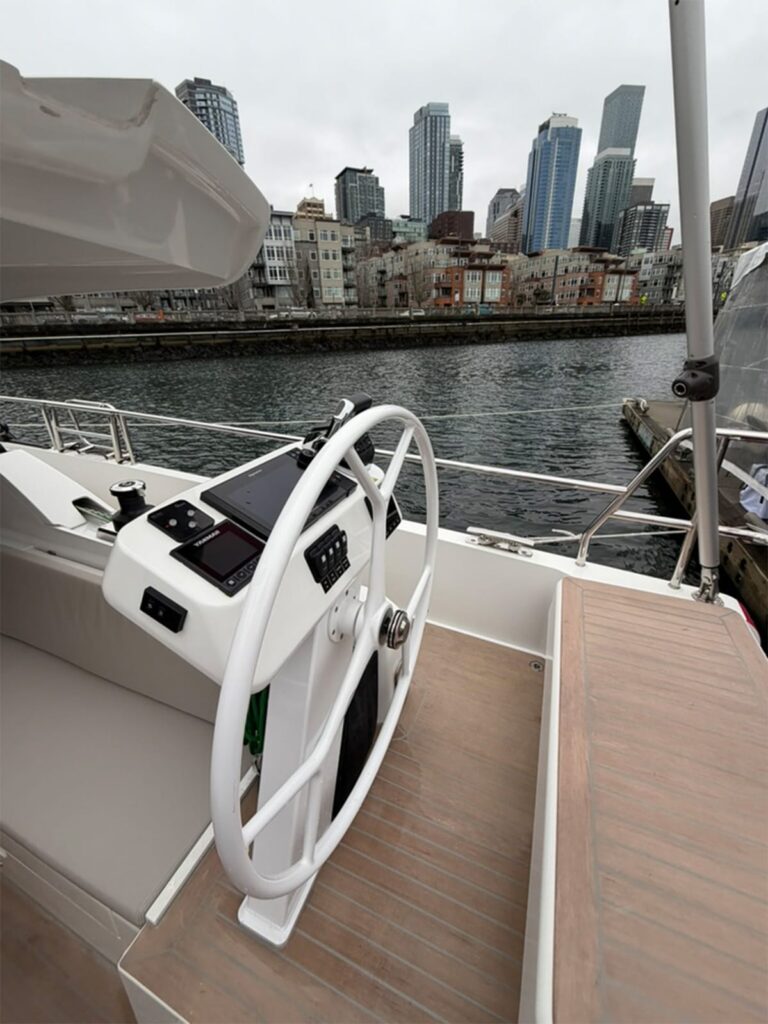
Even after decades on the water, docking still demands attention, communication, and practice. Wind, current, unfamiliar marinas, and changing conditions create new challenges every time.
Their advice? Keep practicing.
The sailors who make docking look effortless are often the ones who never stopped working on the skill.
5. Living Aboard Is Different Than Owning a Boat
One of the most overlooked cruising challenges happens before leaving the dock.
Stuff.
Tools, spare parts, clothing, provisions, safety gear, electronics, and everyday household items all compete for limited storage space. Without a system, boats can quickly become difficult to manage.
Jeff and Jean shared several strategies for organizing life aboard, but perhaps the biggest takeaway was that successful cruising often starts with simplifying.
6. The Small Habits Matter Most
Many sailing courses focus on major skills.
Cruising often comes down to dozens of small habits.
How lines are stored. How gear is secured. How crew communicate during maneuvers. How equipment is maintained. How problems are documented before they’re forgotten.
Individually these habits seem minor.
Together they create the difference between a stressful voyage and an enjoyable one.
7. The Best Cruising Advice Usually Comes From Experience
Perhaps the most valuable part of the presentation wasn’t a checklist or technical explanation.
It was hearing the stories behind the lessons.
The moments that worked. The moments that didn’t. The mistakes, adjustments, and discoveries that only come from years of life on the water.
Those experiences often reveal insights that are difficult to find in manuals and impossible to learn from social media highlights alone.
Want to Sail Smarter?
Jeff and Jean’s full online class explores these topics in much greater depth, along with practical advice on provisioning, boat systems, safety, weather, maintenance, communication, and the realities of cruising life.
If you’re planning longer cruises, preparing for boat ownership, or simply want to learn from sailors who have spent decades doing it, the replay is now available on demand.
Join The Discussion
-
Cruising Habits with Jeff & Jean
What makes cruising enjoyable isn’t just sailing skills. It’s the habits, systems, and mindset you develop along the way.
In this popular online class, veteran cruisers Jeff and Jean share practical lessons learned from decades of cruising. From provisioning and boat organization to docking, maintenance, weather, and teamwork aboard, they offer real-world advice that can help sailors avoid common mistakes and cruise with greater confidence.
One of the highlights of the class is Jeff and Jean’s collection of “Unwritten Laws of Sailing,” humorous reminders that boats have a way of keeping us humble and that flexibility is often a cruiser’s greatest asset.
Whether you’re preparing for your first cruising adventure or planning longer voyages, you’ll come away with valuable insights from sailors who have experienced it all.
For those who attended live, what was your favorite takeaway from the class? Was there a cruising habit, tip, or lesson that really resonated with you?
We’d love to hear your thoughts below.
-
This discussion was modified 3 months, 2 weeks ago by
 Diona.
learn.americansailing.com
It’s not just a ride to shore—it’s your second boat. Learn how to operate, equip, and manage your dinghy safely before it manages you.
-
This discussion was modified 3 months, 2 weeks ago by
Sorry, there were no replies found.
Log in to reply.