




Anchoring Basics - ASA Bite Sized Lessons

Bite Sized Lessons : Anchoring Basics

Picture of American Sailing
American Sailing

AD: PREDICTWIND
ADVERTISMENT

AD: SAILTIME
ADVERTISMENT

AD: GARMIN
ADVERTISMENT

AD: SUNSAIL
ADVERTISMENT

We know that learning to sail can be overwhelming and there is a lot to take in. In an effort to help we’ve created a series of “Bite Sized Lessons” taken straight out or our textbooks – Sailing Made Easy and Coastal Cruising Made Easy.

In this lesson we take a look at anchoring and the meaning of the terms “rode” and “scope”.

 
An anchor’s ability to hold depends to a great degree on the angle at which the rode is pulling on it. The angle at which the rode pulls on the anchor is determined by it’s scope – which is the ratio of the length of rode used to the distance from the boat’s bow to the seabed. A common practice is to use the 7:1 ratio for chain and rode setups. To figure all that out, here is an equation to keep in mind. Add the height of the boat’s bow above the water, to the depth where the anchor will lie, and multiple the total by seven. That will give you the amount of rode to use.


AD: GARMIN
ADVERTISMENT

AD: PREDICTWIND
ADVERTISMENT

AD: SAILTIME
ADVERTISMENT

AD: SUNSAIL
ADVERTISMENT

Related Content

Sailing Into STEM

Sailing Into STEM explores how sailing brings science, engineering, math, and physics to life through hands-on learning.
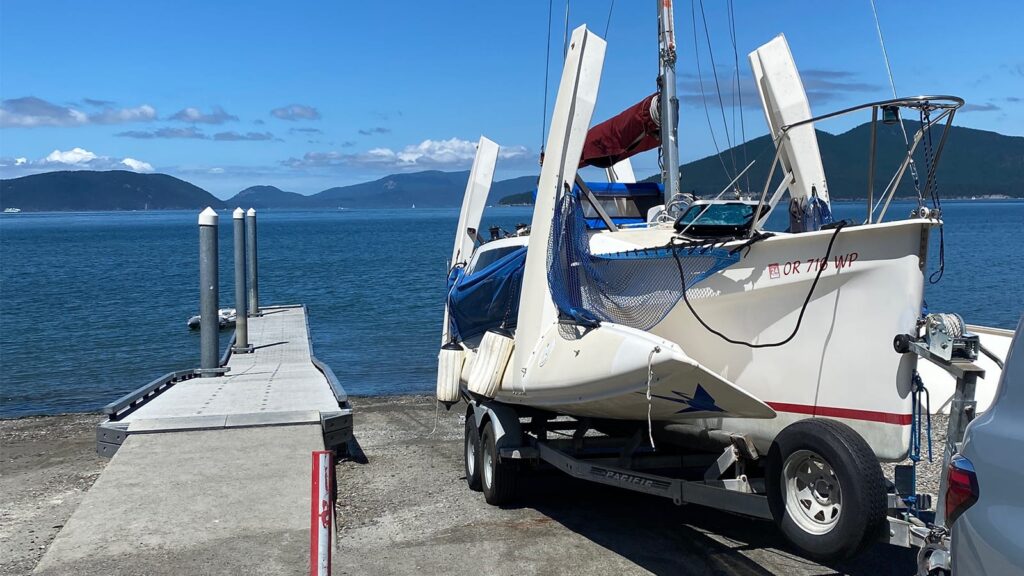
Trailer sailing can open up new waters for exploration.

Encouraging Landlocked Sailors to Embrace Trailer Sailing

Trailer sailing makes sailing portable and helps inland sailors access new waters with confidence, flexibility, and freedom.
A sailboat on a sunny day

I Never Planned to Become a Sailor

One skeptical sail in Grenada turned into a passion for sailing and travel that reshaped her entire life—and now helps others find it too.