


Table of contents
By Giovanni Profeta
“Our sport is dangerous. We risk our lives here, so we need to stay calm and focused and leave all the rest out.”
Nine-time MotoGP Grand Prix world champion Valentino Rossi gave that heavy-hearted warning at the 2020 Austrian Grand Prix. Moments earlier, Johann Zarco and Franco Morbidelli had a horrible collision at nearly 200 miles per hour. Morbidelli’s bike hurtled through the air like an unguided missile missing Rossi’s helmet by a terrifying few inches. Rossi later admitted that getting out alive after an incident like that made him change his perspective on this sport’s risk forever.
I am a MotoGP fan but not a rider (I love them, they are breathtaking examples of human ingenuity, but I don’t trust myself on them). Modern racing bikes are aesthetically impeccable, clean lines with aerodynamic winglets engineered to generate massive downforce. Their narrow v4 engines deliver insane, violent torque on the wheels, all designed to push the limit between machine and man every time you snag your visor shut.
We sailors aim to cheat physics all the time as well, bending the wind to manipulate physical forces to our advantage. We use the sail as a vertical wind to generate aerodynamic lift sideways. This constant interplay between aerodynamic lift and hydrodynamic resistance drives the boat into rapid forward momentum. But as I confessed a few sentences ago, I like speed far too much to be trusted with that kind of power on my wrist.
From Apex to Horizon
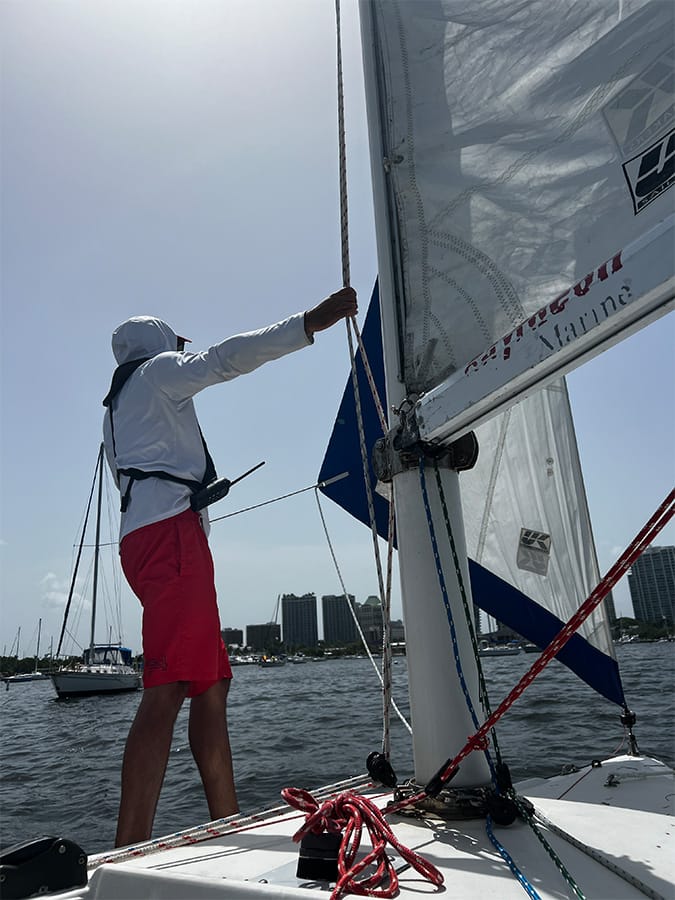
Throughout my life, I have heard about a traffic safety and defensive driving acronym called SIPDE for scan, identify, predict, decide and execute. It applies to bicycles, motorcycles, and cars alike. Reading about the concept a few mornings ago I realized that even without noticing, I’ve been applying this concept in my time on the water. The principle is simple: scan your surroundings all the time. Identify potential dangers and the apparent intention of vessels around you. Predict what they might do, decide what is the safest way to protect yourself, and then execute the necessary maneuver.
On the asphalt, a rider calculates this optimal racing line on a corner by connecting the turn-in-points, the apex, and the track exit into one fluid arc. Sailing requires the same mental mapping, but our track is invisible, constantly changing beneath our keel. On a beam reach, we manage heel angles, leeway, and wind shifts. Both environments demand that you look down the track (or across the horizon) to spot what could change before they alter your trajectory. Proactive positioning is the only way to protect your momentum and your life.
Spotting the corner: Scan & identify
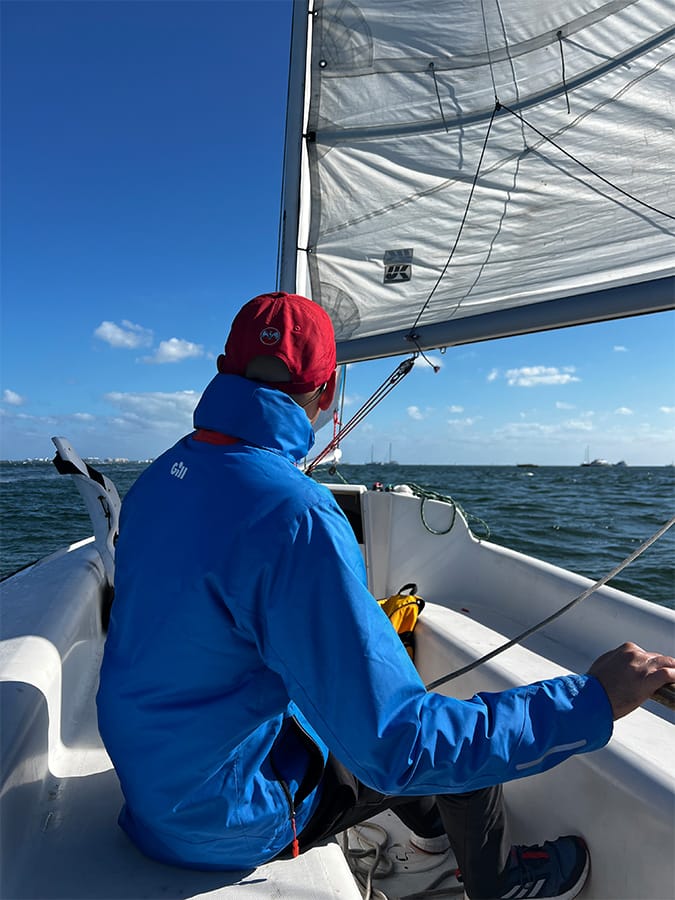
The first letter of the acronym, “S”, stands for Scan. Just like a driver who is constantly looking at his mirrors, a sea captain must reject that passive habit of just looking ahead. On the water, scanning must be systematic, sweeping the horizon regularly.
Moving to the letter “I”, while scanning is for gathering raw visual data, Identifying is the exact moment when you recognize what is a possible threat to you and your vessel. By doing so, you get the vital context for the next step, anticipate the potential hazards they might create.
In busy coastal waters like Biscayne Bay, you are navigating a vast field of visual noise where vessels move at different speeds. When you scan, you need to filter the light pollution that comes from the Brickell area to isolate the weekend renter of a jet ski that has little to no clue about rules of the road. While doing so, keep in mind that a triple-outboard center console is heading toward Nixon’s Sandbar at forty knots, while you are making only six knots on a beam reach. If you can’t pick these variables out and isolate them from the background quickly; your time to predict their path disappears completely.
The racing line: Predict, decide, and execute
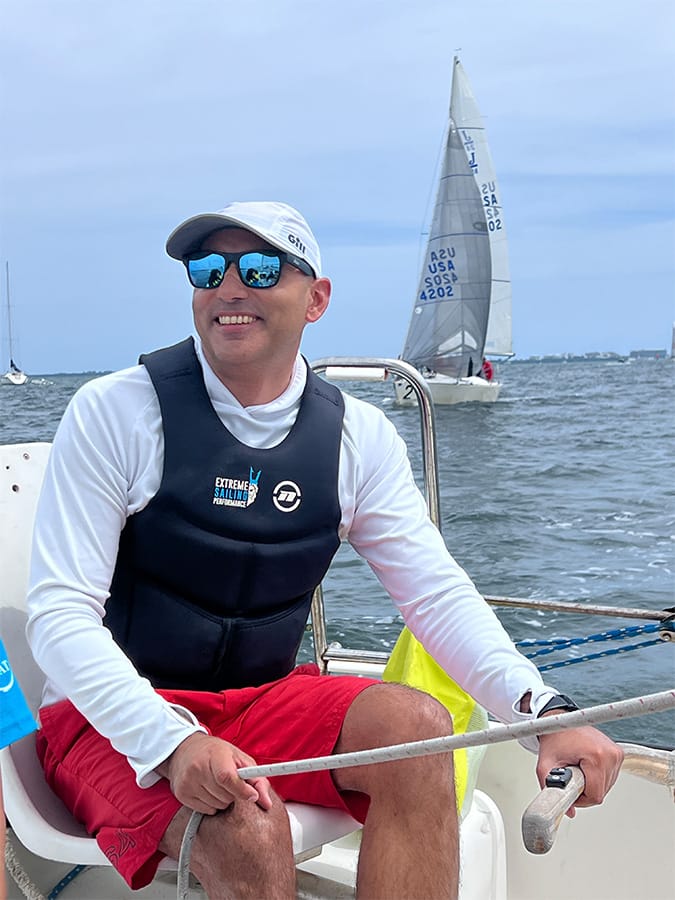
Predicting is undoubtedly the most critical step. On the water, where sailboats don’t rely on brakes and the wind dictates where you should turn, you cannot wait for disaster to unfold in front of you. You need to predict the outcome while there’s still time to act and stay clear.
Once you have predicted a potential collision course, you enter the deciding phase. Here, there’s no room for panic; your life and the lives of others can change in an instant. This phase requires you to decide and weigh your options, such as altering your heading, adjusting sail trim, or changing speed, against the variables you identified during your scan. It is the bridge between calm analysis and reflexive muscle memory. You must filter out hesitation, make your choice, and commit to it completely to open the gate for the final phase: Execute.
This is the moment when theory meets reality: you have scanned the horizon, identified a possible obstacle, predicted the outcome, and decided your course of action. Now you must execute!
Defending the line: Using imagination to your advantage
The core of this process is using your imagination to visualize scenarios before they unfold. Most of the time when I see someone skippering a boat recklessly, oblivious to my presence even though my huge white sail screams “PLEASE SEE ME!” I try to anticipate their movements to avoid being cornered.
My go-to is always to imagine my future position relative to their estimated course, seeing all the different possibilities before they happen. This approach is particularly effective at avoiding dangerous predicaments. I’ve seen skippers get caught in an imminent collision just because they didn’t take early measures. Thinking a few plays ahead makes a huge difference.
The checkered flag: Negotiating with physics
On a boat we are just a few heartbeats away from total chaos. We all have been close to a catastrophe missed by a few inches. Afterwards, some say it was preparation, while others might say it was mere luck. Nevertheless, nobody wants to be put in such a position. The line between absolute control and utter disaster is governed by a hard-to-miss truth: the margin of error never expands. On a sailboat, we don’t conquer the elements, and we don’t rule over physics. We simply negotiate with them with every decision we make.
My grandfather, a merchant marine captain, always used to say, “The sea demands respect; never forget that.” A delayed decision can turn a peaceful passage into a struggle for survival. Every time we leave the dock, we must respect the sea before it demands our submission.
I believe the same applies to my need for speed on the asphalt, at the racetrack, and on every road in between. Whether balancing a 300-horsepower motorcycle at the apex, or gliding through the waves on tons of fiberglass, safety is never passive. We do not stop accidents from happening with luck alone. We prevent them with foresight, humility, and the discipline to act while we still have room to run.
If you have finished this article, you may have unknowingly been applying the SIPDE concept all along. I invite you, in the comments here, to share your experiences of how SIPDE or a similar tool has helped you navigate a potential collision.
About the Author
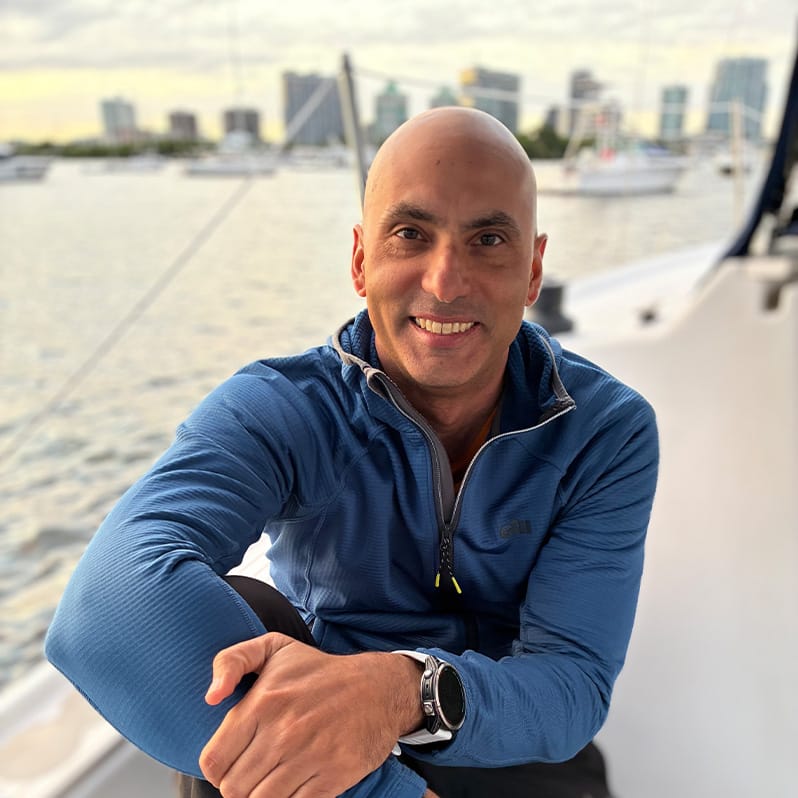
Giovanni Profeta is a sailing instructor specializing in ASA 101, teaching both youth and adults with a focus on sailors with physical and intellectual disabilities. He is passionate about making sailing accessible and empowering for everyone on the water. Alongside instruction, Giovanni is an avid regatta racer who competes in events across the United States. He has also crewed on multiple offshore sailing assignments throughout the Caribbean and through the Panama Canal, building broad experience in both competitive and cruising environments.
Join The Discussion
-
How do you anticipate and avoid potential collisions on the water?
Staying safe at sea requires more than knowing the rules. It takes awareness, anticipation, and decisive action. Read Giovanni Profeta’s article, The Illusion of Safety, to explore how the SIPDE method can help sailors recognize hazards and respond before situations become dangerous: https://americansailing.com/articles/the-illusion-of-safety/
americansailing.com
The Illusion of Safety explores how awareness, anticipation, and quick decisions help sailors recognize risks and prevent accidents at sea.
Sorry, there were no replies found.
Log in to reply.