
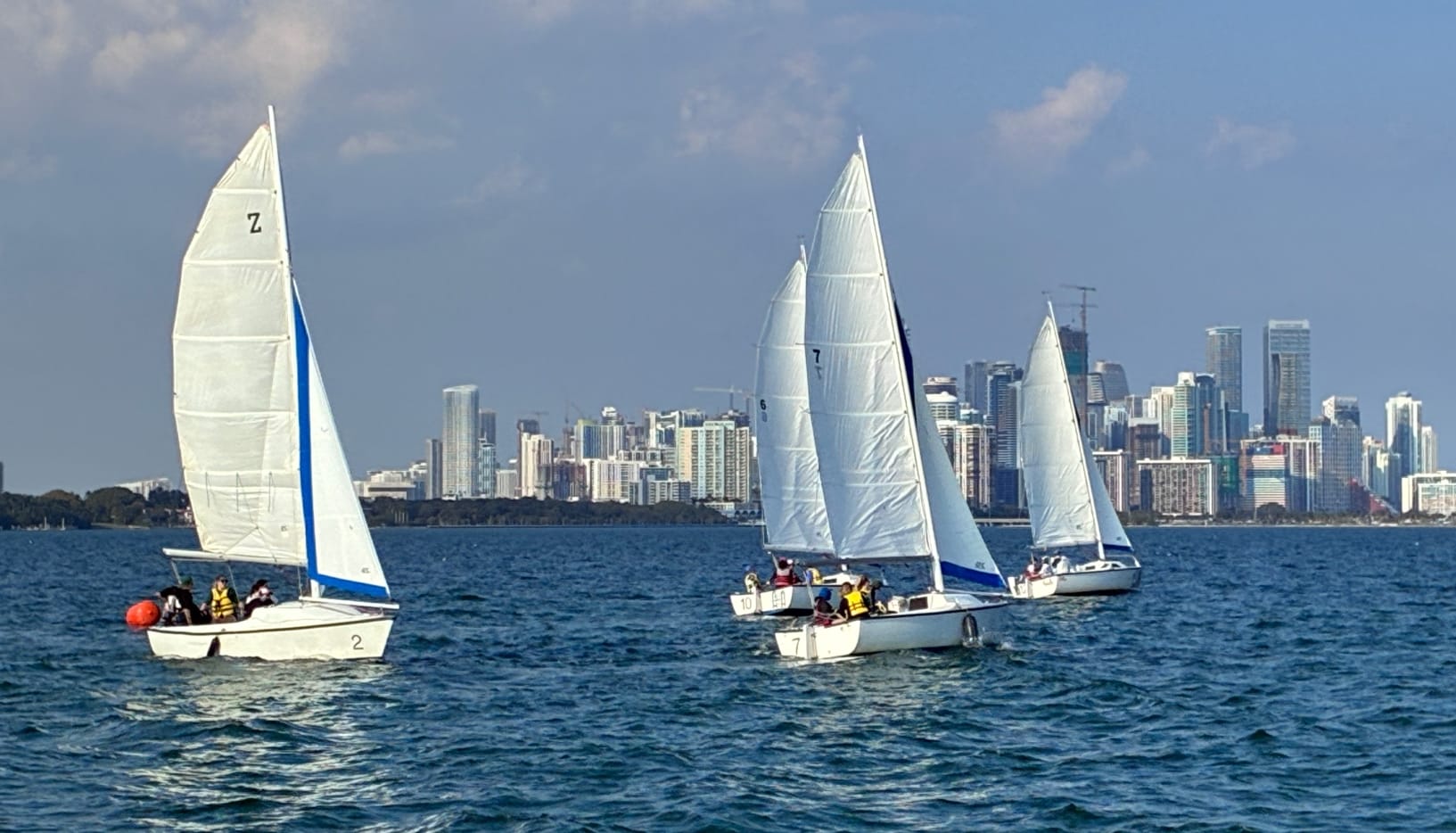




By Giovanni Profeta
Table of contents
Saturday, 8:57am: The Skippers Meeting
“Remember, if I say GO, you go. Do not hesitate. If we bump into another boat, I’ll take the blame.” I repeated this mantra, if you would call it, to calm the flood of worries from my students at the end of the skipper’s meeting. It had taken days of persuasion to get them to the dock; they were hesitant, and participation felt like a steep mountain to climb. My students deal with complex intellectual and physical disabilities, and for them, the world can often feel like a place where boundaries are rigid and possibilities are limited. Yet, I had a vision for my helmsman at the tiller. We were here to race, not just cruise. Eventually, I secured two students and a volunteer for our crew.
The inevitable question followed, delivered with a mix of curiosity and hesitation: “What is a regatta?” How do you explain the overwhelming nature of sights and sounds of a regatta to a new helmsman who struggles with sensory processing? I started with a car race analogy: NASCAR, cars circling a circuit, first to the finish line wins. Simple, right? Unfortunately, I was met with both confusion and skepticism: “A boat race? Why? Sailboats don’t go fast. We don’t race when we go out; we simply stroll around the bay.” After addressing their concerns about the long day and logistics, I explained the starting line rules. My helmsman, still unconvinced, muttered, “It’s going to be a long day.”
At the skipper’s meeting, teams were assigned boats on a “first-come, first-served” basis. As we approached the dock, my crew felt left behind as others were already being assisted onto their boats. It was a stark contrast to the laid-back approach they were used to with sails rushed to be hoisted, skippers shouting instructions as crew members ran back and forth, all representing a quite familiar hum of competition. I walked toward the end of the dock, spotting two remaining Catalina Freedoms. Suddenly, a wake from a passing boat rocked the pier, and the Catalina nearest us emitted a low, resonant hum against the dock, like a racehorse eager to leave the gate. That was it. Boat No. 7 was the one.
Once we were on the water, the reality of the race started to set in and my helmsman’s anxiety spiked. Close proximity to other boats made him frantic. I maintained my mantra: “I’ll be calling the shots. If I say there’s room, go for it, don’t be afraid.” Behind his sunglasses, he kept darting his eyes left and right like a ping-pong match. My voice was his only anchor.
Race 1: A Hard Lesson
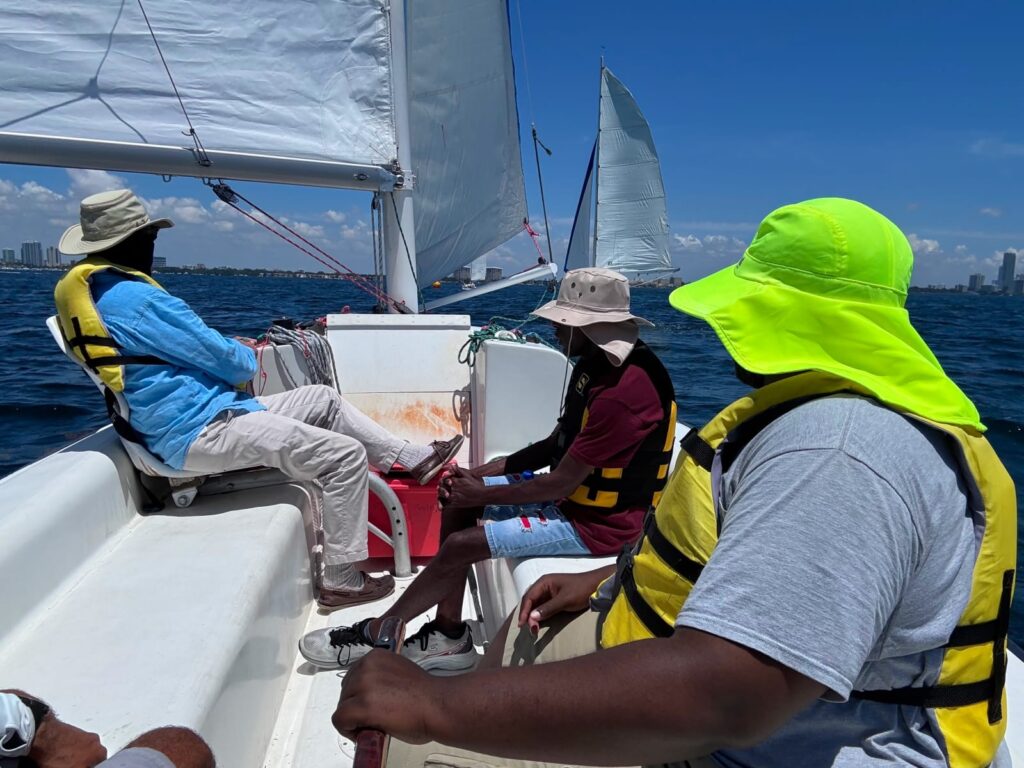
My helmsman at the tiller at the start of Race 1.
During the countdown for Race 1, he froze. When I urged, “Get closer to the committee boat; 10 seconds…” he completely loosened his grip, letting the boat luff into the wind. I pushed the tiller to dodge a collision, but we started dead last. Overwhelmed by the traffic, he yanked the tiller hard towards him, causing a violent, unintentional gybe. The boom rattled; panic rippled through the crew. I took the tiller, reset our course, and calmed everyone down. By the time I handed control back, it was clear we were too overwhelmed to compete. I retired us from the race to focus on coaching. The defeat was heavy, but necessary. I watched my helmsman slump, his knuckles still white from gripping the tiller. He was physically depleted, sweat beading on his forehead, his breath coming in shallow, ragged bursts. He had been fighting the boat, fighting the wind, and fighting his own instincts. I needed to shift that energy. I knew that if I could convince him that the boat was not an adversary to be conquered, but a partner to be danced with, the panic would eventually yield to focus.
In the quiet between race 1 and 2, I steered us away from the fleet to build his confidence. “Panic happens in your first race,” I encouraged. “Breathe, maintain course, keep the boat steady.” Though initially defeated, he used the time to pivot our strategy: for Race 2, we would prioritize a clean start at the pin end, away from the chaos.
Race 2: The Subtle Shift
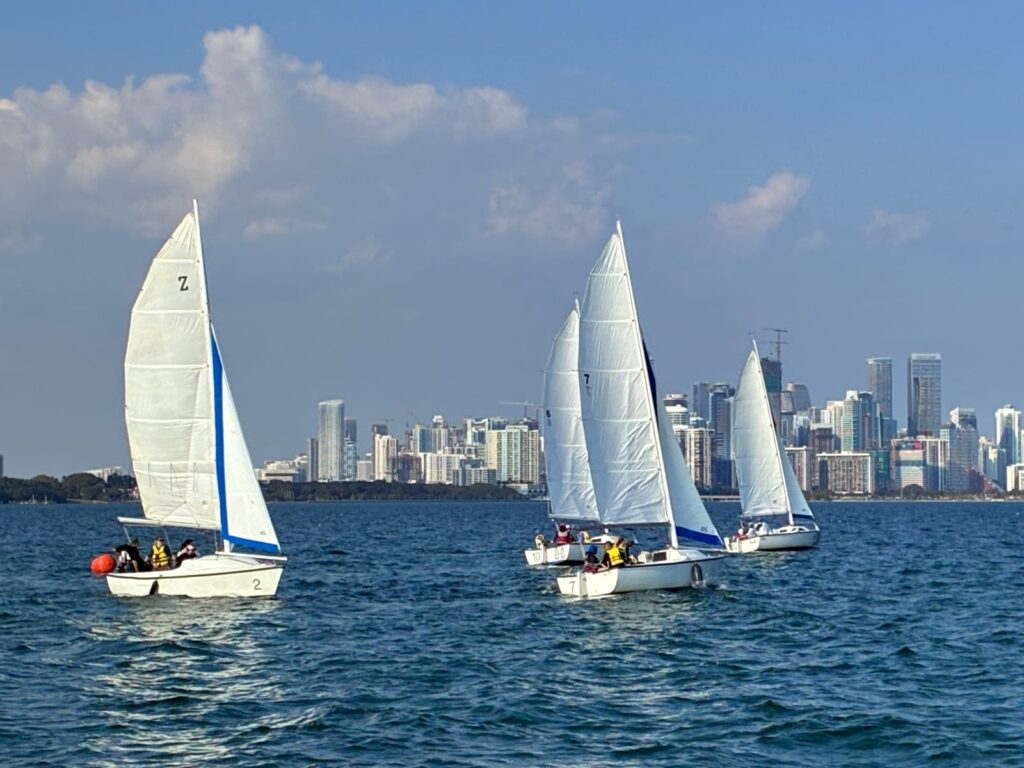
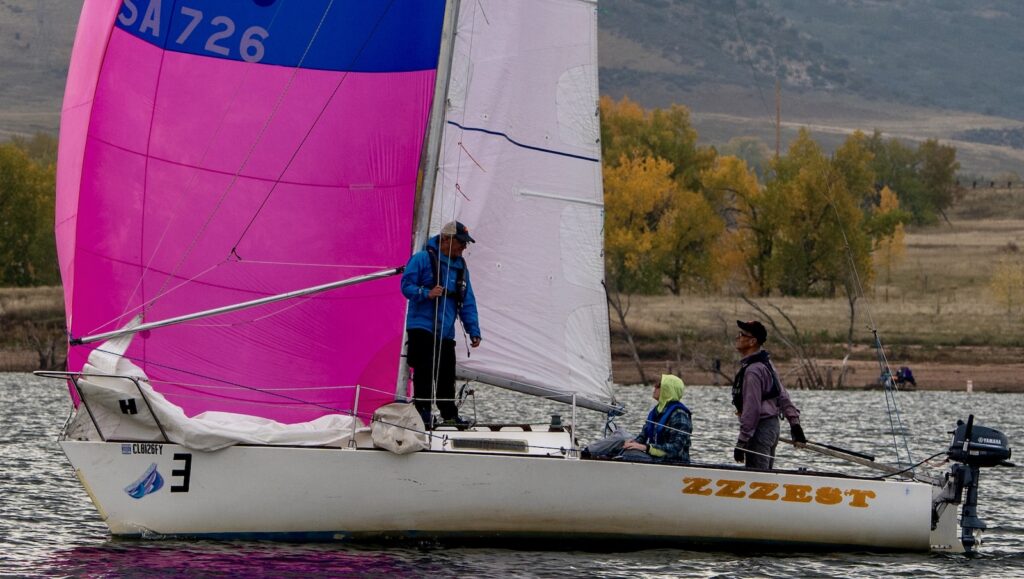
My crew and I rounding the mark during Race 2.
The second race brought fresh nerves, but a subtle shift occurred. I signaled, “25 seconds to start, keep clear, head up!” When the race started, we crossed the line first, positioned lower than the competition on a starboard tack. We held 5th position, but the pressure of the windward mark closing in rattled him. When my crew member at the jib yelled about a potential collision, my helmsman panicked, yanking the tiller once again towards himself yielding another accidental gybe.. We lost our position. Yet, as we cleared the mark on a port tack, something had changed. My crew didn’t quit. They kept the boat moving, found decent downwind speed, and finished the course. We crossed last, but the position was irrelevant. The victory was in their resilience; they hadn’t just survived, they had finished their first-ever regatta.
Race 3: The Gamble
For the final race, I took a more aggressive approach, but my helmsman froze at the start once more, leaving us last. We tacked early, sailing alone on a port tack toward the far side of the course. It was a gamble, but a wind shift became a game-changer, helping our strategy. As we approached the windward mark, the fleet converged like arrows, but we were there first. We rounded clean, leading the pack. My crew was elated, cheering, “We’re winning!” For the first time, they were truly racing, not just reacting. We held the lead through two legs, but Boat No. 11, the regatta leader, was closing in. As they approached, my helmsman started looking back, his wake wavering. “Don’t look back,” I commanded. “Maintain course, straight to the committee boat.”
I wish I could write that my helmsman steered us through the finish line first, but we were overtaken at the end. We crossed second, a hard-fought battle to keep our position. They were disappointed, but even in losing, I saw winners in my crew. We hadn’t just steered a boat; we had steered a mindset. On the way back to the dock, my helmsman looked at me, a newfound spark in his eyes: “Giovanni, teach me how to be faster. I want to race again. I want to learn how to win.”
The Finish Line
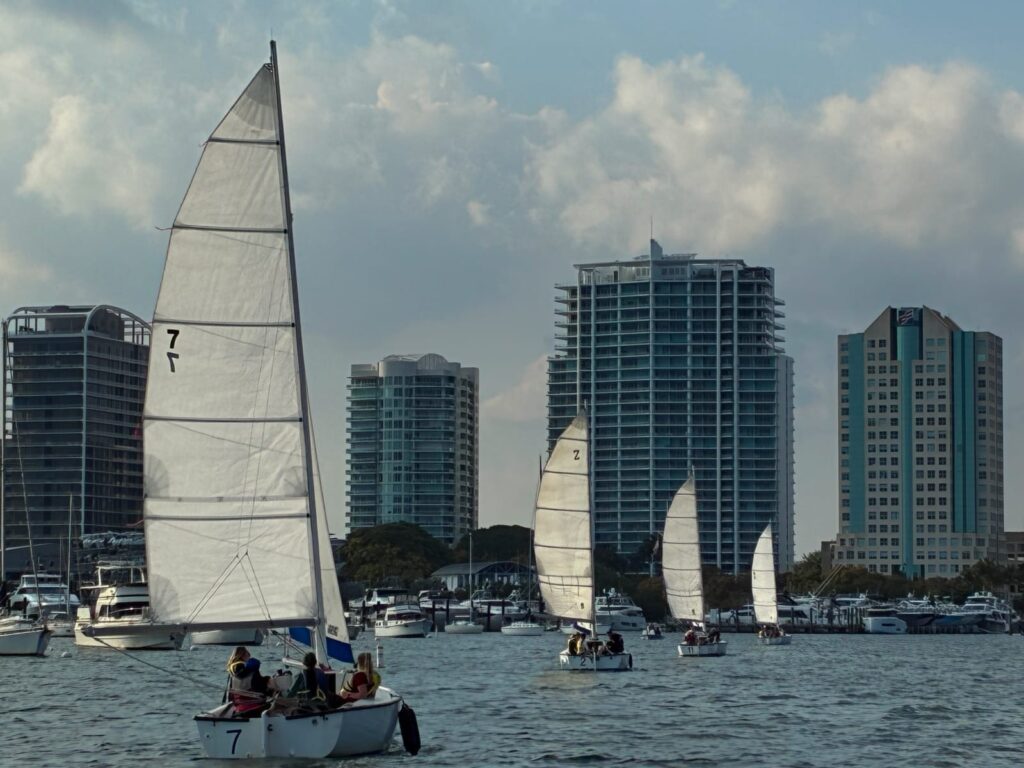
All competitors heading back to the dock after the regatta.
That moment reinforced why I do what I do: teaching young adults with intellectual and physical disabilities not just how to sail, but how to shift their mindset. This goes beyond the mechanics of the sport or managing stress; it is about providing a vehicle to show others, and themselves, that perceived limitations do not define us.
In our daily lives, we are often told what we cannot do. For my students, this is a message they hear far too often. When we hit the water, however, the playing field levels. The wind does not care about a diagnosis. The water does not judge based on a label. Sailing demands presence, decision-making, and resilience, qualities that are available to everyone, regardless of ability.
The victory truly was not in the trophy or the final position. It was in the realization that when we embrace the challenge rather than fight it, we prove that for them, just as for anyone else, the impossible is actually possible. We are all capable of greatness.
My helmsman started the day asking, “What is a regatta?” and finished it by asking, “How do I win?” That is the real victory. It is the transition from a mindset of survival to a mindset of pursuit. We are all capable of greatness, provided we are willing to put in the work first. The rest? The rest comes naturally.
Give it a try; it works every time.
About the Author
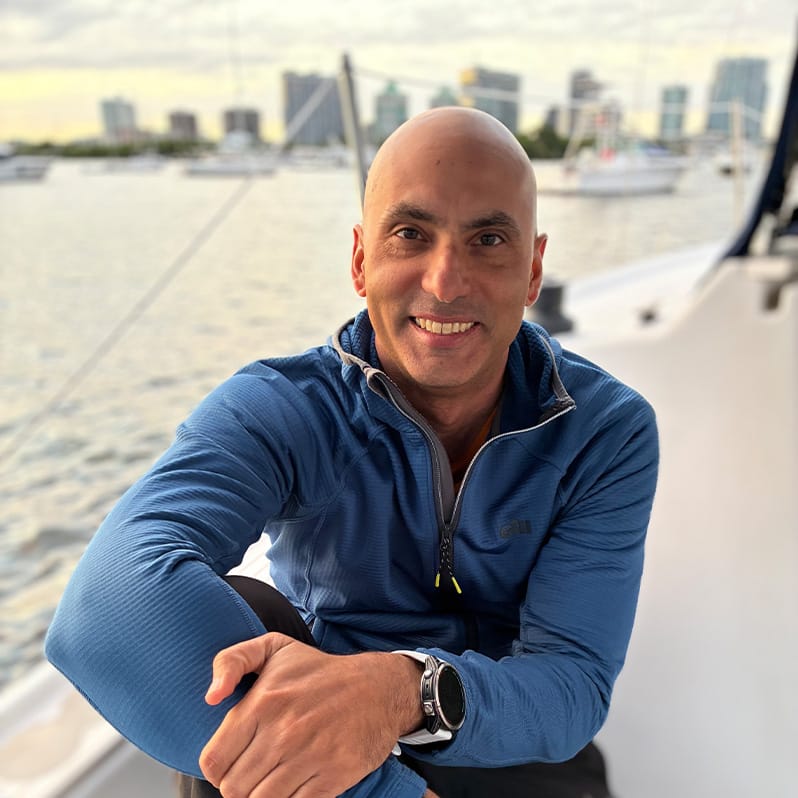
Giovanni Profeta is a sailing instructor specializing in ASA 101, teaching both youth and adults with a focus on sailors with physical and intellectual disabilities. He is passionate about making sailing accessible and empowering for everyone on the water. Alongside instruction, Giovanni is an avid regatta racer who competes in events across the United States. He has also crewed on multiple offshore sailing assignments throughout the Caribbean and through the Panama Canal, building broad experience in both competitive and cruising environments.
Join The Discussion